A ‘bald baby’ JD Vance mural has popped up in Fishtown

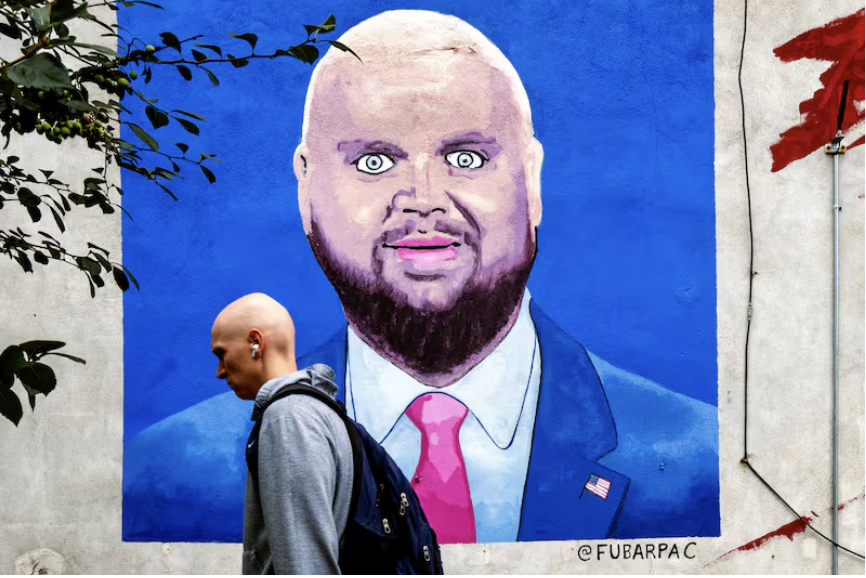
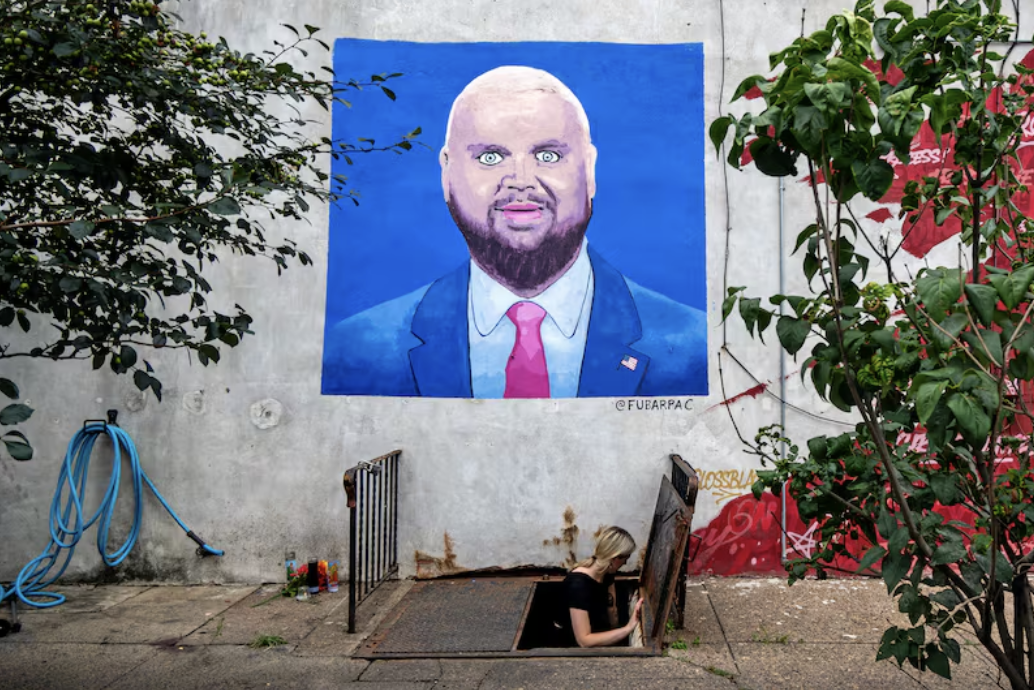
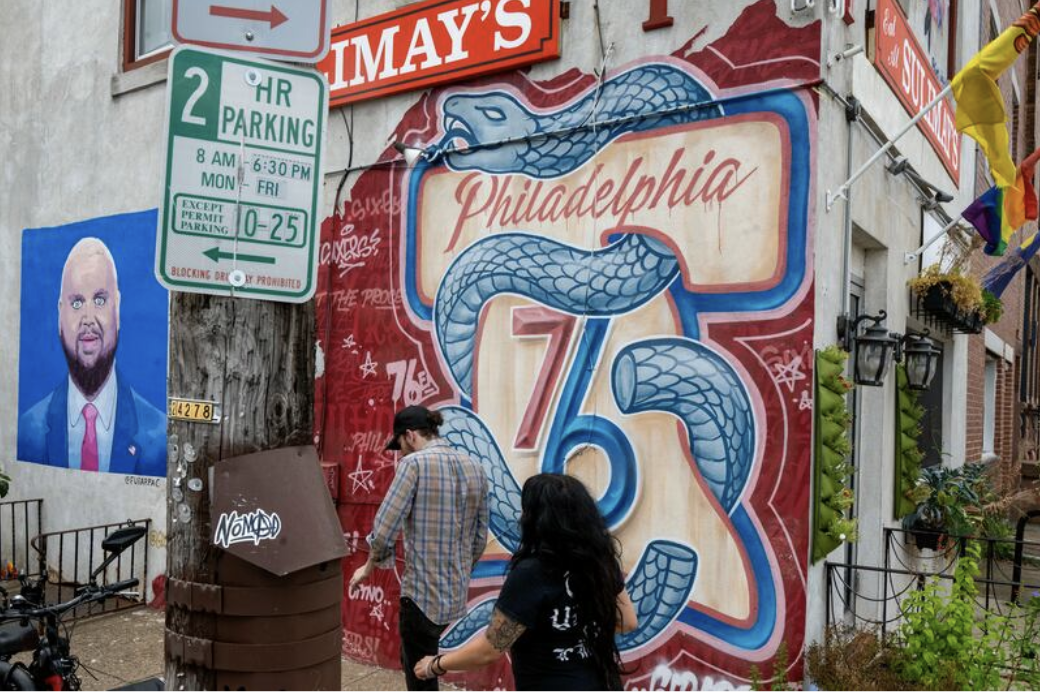
Last week, a mural of U.S. Vice President JD Vance debuted on the side wall of Fishtown restaurant Sulimay’s.

The image is one of many memes of Vance that have been circulating on the internet. The images include Minion Vance, Shrek Vance, and even one where he appears as the Las Vegas sphere.

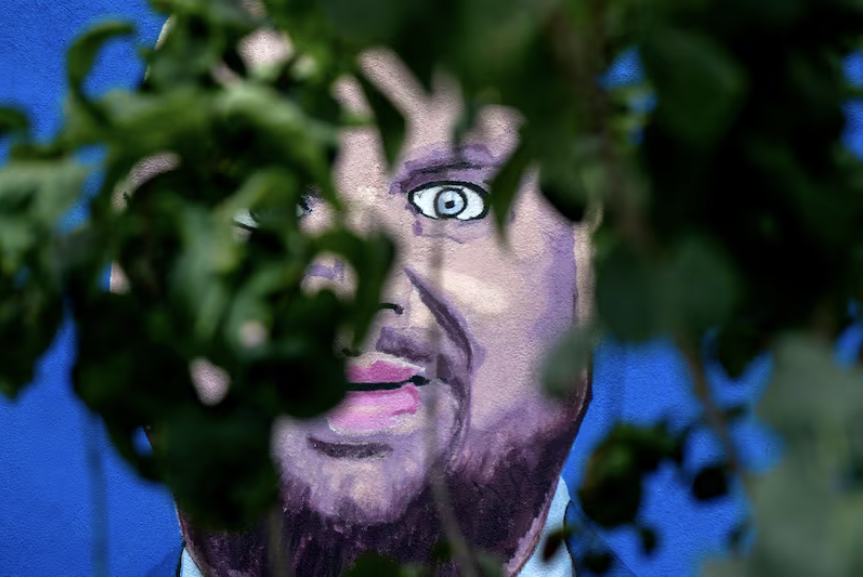
The Fishtown mural shows a wide-eyed, chubbier version of the vice president’s face but with a bald head, often referred to as the “bald baby” or “baby Vance” meme.

Videos of the mural have amassed millions of views on social media. On Sunday, TikTok user Paige Weinman posted a video of the mural that’s gained 900,000 likes and nearly 3 million views.

The bottom right of the mural reads “FUBARPAC,” an acronym for F–ed Up Beyond All Recognition/Repair. PAC is a political action committee.

Jack Inacker, a Philly native and founder of FUBAR PAC — self-defined as a “veteran-led Democratic opposition, waging a ruthless year-round campaign against MAGA cowards and their allies” — is the brain behind the Fishtown mural.

After months of exchanging Vance memes with a friend, Inacker decided to project the images against a prominent wall for Philadelphians to see. After further thought, he decided a painting would draw even more attention.

He made a post in the Philadelphia subreddit, asking if he could use someone’s wall for the project. Among the three users that responded, Inacker said Sulimay’s was the “perfect” fit.

Sulimay’s owner Chad Todd said he backed Inacker’s idea to highlight how “deplorable” both President Donald Trump and Vice President Vance have been since being sworn into office in January.

“No moral person can support what they’re doing,” Todd said. “I’ll take any opportunity to bring attention to it.”

Last Friday, Inacker brought along a projector, a handful of Sharpies, about $200 worth of paint from Lowe’s, and an artist friend.

They began by tracing over a projected image, then filling it with color until the piece was finished 12 hours later. Fishtown residents stopped by to lend a hand, Inacker said. Some suggested touch-ups, like adding eyeliner.

While the muralized meme of Vance is largely seen as something comical, Inacker said its purpose is to forge community and shed light on the Trump administration’s crippling federal financial cuts.

“Painting a meme on the side of a building is dumb bulls—, right?” Inacker said. “It’s fun to do with your friends, but I wanted to figure out a way to transform that into some meaningful action as well.”

In a TikTok posted Monday, Inacker showed a time-lapse of the mural’s creation. The clips were overlaid with references to Vance’s stance on cuts to foreign aid, the increased cost of Medicaid, and the lives impacted by Trump and Vance’s decisions.

Inacker plans to place a small plaque at the bottom of the mural with a QR code that directs people to a voter registration form.

He loves that the mural serves as a photo opp, but he wants it to become a resource and inspire people to think about political issues in their own way.

“I want to make sure that the barrier to entry to politics is really low, that more folks can get involved, and they don’t have to do serious things all the time,” he said. “They can have a party together to paint their own JD.”

With the mural, Fishtown joins somewhat of a global movement as altered images of Vance have become an international fixture.

In June, a Norwegian tourist claimed he was denied U.S. entry at Newark Liberty International Airport because he had downloaded the bald baby meme on his phone. The Trump administration refuted his claim, saying he was denied because of “admitted drug use.”

Weinman said she was surprised by the interest her post generated, but not by the popularity of the mural itself.

“We were like, ‘Oh, if you’re going to deny travelers the ability to come into the country because of their political views, their sense of humor, or their private conversations, that’s something that really stands in opposition to American values.’ So, I can understand why that image really took off in general, and why so many people find it funny.”

Similar murals of Vance have popped up on the vice president’s recent England tour. Last week, a poster by the “Everyone Hates Elon” protest group displayed the same image of Vance on a billboard in Cheltenham, Oxfordshire.

Todd said he has no plans to remove the mural from the restaurant’s wall just yet.

“As long as the positivity continues, it will stay up,” he said. “But I really don’t want to look at that for the rest of the year. It’s slightly terrifying, and freaking out the kids is a concern.”

The story has been updated to include comments from Sulimay’s.

– The Philadelphia Inquirer

An Ardmore ceramic artist will turn your loved one’s ashes into an object of your choice

When artist Daniel Hoffman‘s aunt Sheila Rocco passed away in 2011, Hoffman, who was then studying ceramics at Ohio State University, sank into an emotional pit. The only way out, to him, was to create an heirloom that would honor her life.

Weeks later, Hoffman handcrafted a light blue vase, which would be deemed natural for a student of ceramic arts. Only this time, he added a bit of her remains to the glimmering semi-clear glaze, a practice that would go on to define his career, years later.

“It was a super personal way to get started in this field,” Hoffman said. “She was a really special person to me.”

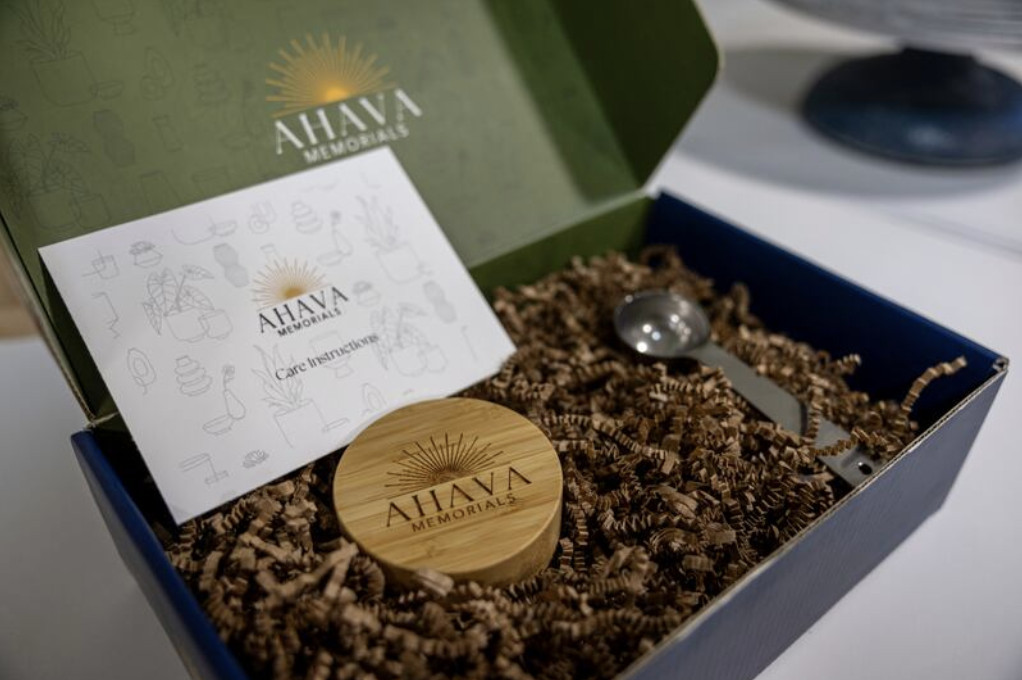
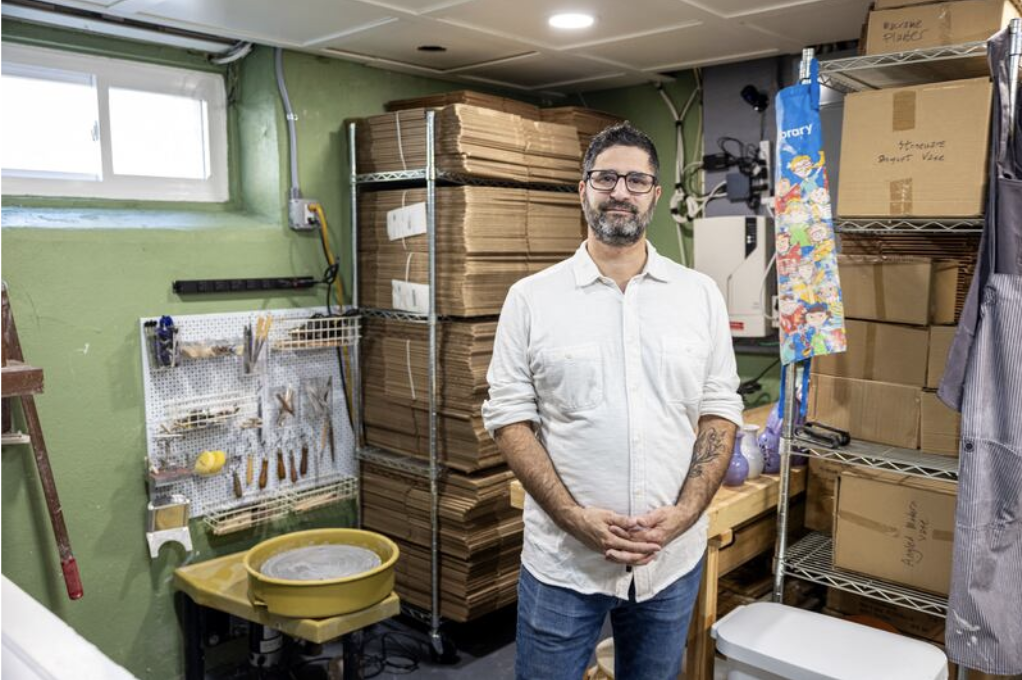
After years of working as a video producer, animator, and creative director, Hoffman established Ahava Memorials in December 2024. He creates multicolored ornaments, twist vases, candle luminaries, and planters in honor of departed loved ones, using their ashes.

“I want customers to really feel that each piece is individual and unique,” the Ardmore-based artist said.

The name Ahava translates to “love” in Hebrew. “It’s an emotional business,” Hoffman said, “and one that requires a layer of trust that few other art specialties do.”

Customers start by selecting a shape and color for the ceramic piece that they think best honors their loved one.

When order requests arrive, Hoffman sends customers a collection kit, along with a personal message assuring them that memories of their loved ones are in trusted hands.

The kit, containing a U.S. Postal Service human remains box, contains a premeasured container for customers to place ashes in. Once shipped, Hoffman picks it up from a secure P.O. box and begins the ceramic-making process.

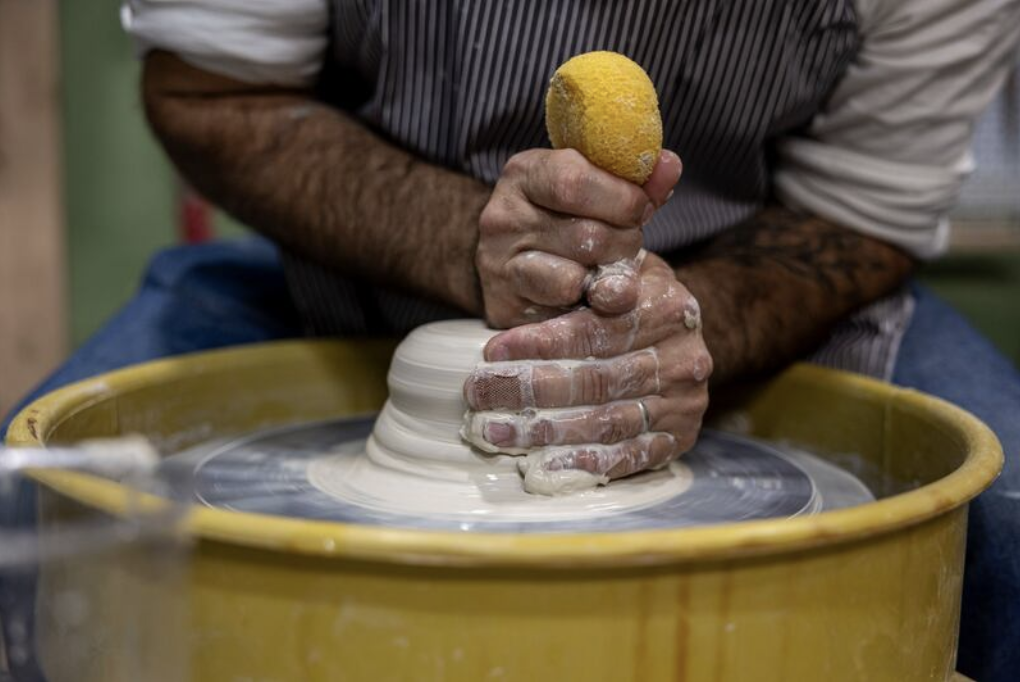
That process involves melding bone ash into a glaze-covered ceramic, using a technique first used in the late-18th century by bone china potter Josiah Spode. But instead of forming cattle bones into hardened clay, as Spode did, Hoffman integrates and seals the ashes into a glaze.

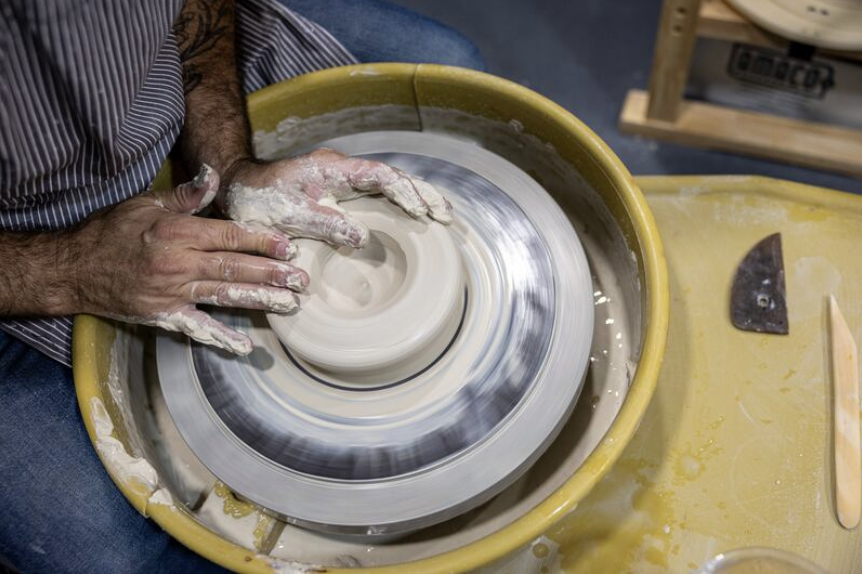
The glaze is then hand-brushed onto a premade ceramic object and placed in a kiln. Once the kiln reaches roughly 1,886° Fahrenheit, the ash-infused glaze is firmly coated onto the ceramic, which becomes the final memorial object.

Among Hoffman’s most popular designs are blue, green, and red-coated vases, ornaments, and planters honoring beloved people and pets.

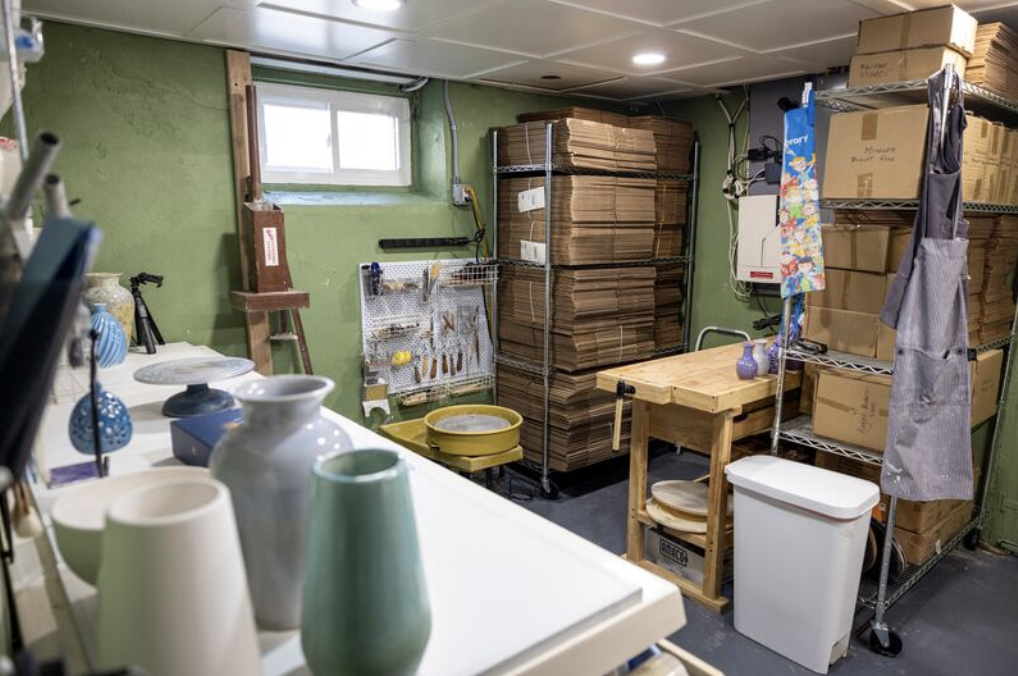
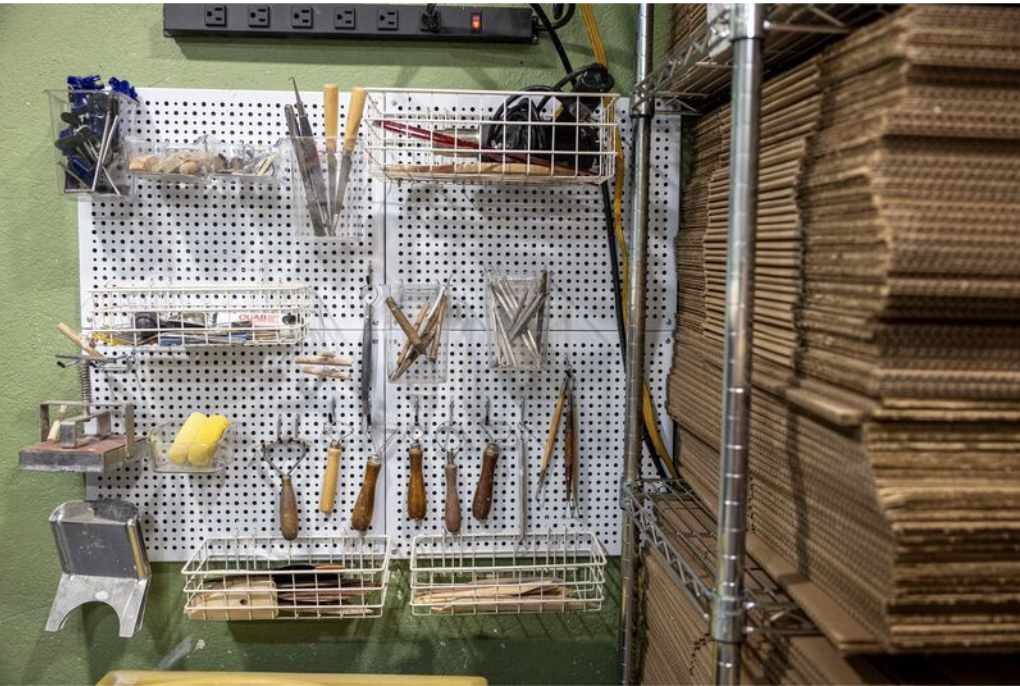
The process, Hoffman said, is a “ton of trial and error.” He spent months building out his home studio and perfecting reliable glaze techniques that would help him create perfect shades of pinks, blues, and reds. And as he’s grown more comfortable with his newly formed designs over the past year, Hoffman’s customer base and offerings have expanded.

Along with new colors and design options, he now casts multiple ceramic objects with one set of remains, and even integrates multiple remains into one design.

Hoffman said he wanted his products to be accessible to everyday buyers. Prices range between $210 and $745, depending on the desired shape, color, and size.

With more people entrusting him with these projects, Hoffman said it has become an even more enriching experience.

“It feels like they’re giving to me as much as I’m giving to them when I make a product for them,” he said. “It’s a special relationship with this product.”

While memorial ceramics seemed like a destined path for Hoffman in college, he never envisioned using his artistic gifts in this way.

“There are a million ways to make a career in the arts,” Hoffman said. “I just kind of found my way doing this.”

He first toiled with clay art as a teenager at Fleisher Art Memorial in South Philly, where he was taught by former chief U.S. Mint engraver Frank Gasparo, who inspired him to pursue a career in ceramics.

After graduating from Temple University and Ohio State, he ventured into studio art, video production, and animation, which led to a role at Comcast as the designer of Jumbotron motion graphics.

It wasn’t until he was laid off as Five Below’s creative director that his passion for memorial-style ceramics was renewed. This time, he was determined to turn it into a full-fledged business.

“I parked this idea for a long time. I tried building it on the side while I was working, but that just wasn’t happening,” he said.

Hoffman said the first phase of production was “hectic,” but with Ahava in full swing now, he is able to forge the kind of relationships with his customers that he first intended. Helping people through grief “feels like an act of giving,” he said.

As the business expands, Hoffman plans to collaborate with crematoriums in the area and dedicate most of his time to creating new products.

He wants to integrate more shapes, colors, and designs into Ahava Memorials, so that the pieces are even more personal to his customers.

A year of leadership shifts later, the Greater Philadelphia Film Office is charting new successes

In the Philly film world, Sharon Pinkenson was a trailblazer among trailblazers.

As longtime executive director of the Greater Philadelphia Film Office, she made Philadelphia a destination for Hollywood productions. This led to the filming of classics like 12 Monkeys and Silver Linings Playbook in the region and cleared the path for future films, true-crime shows, documentaries, music videos, and commercials.

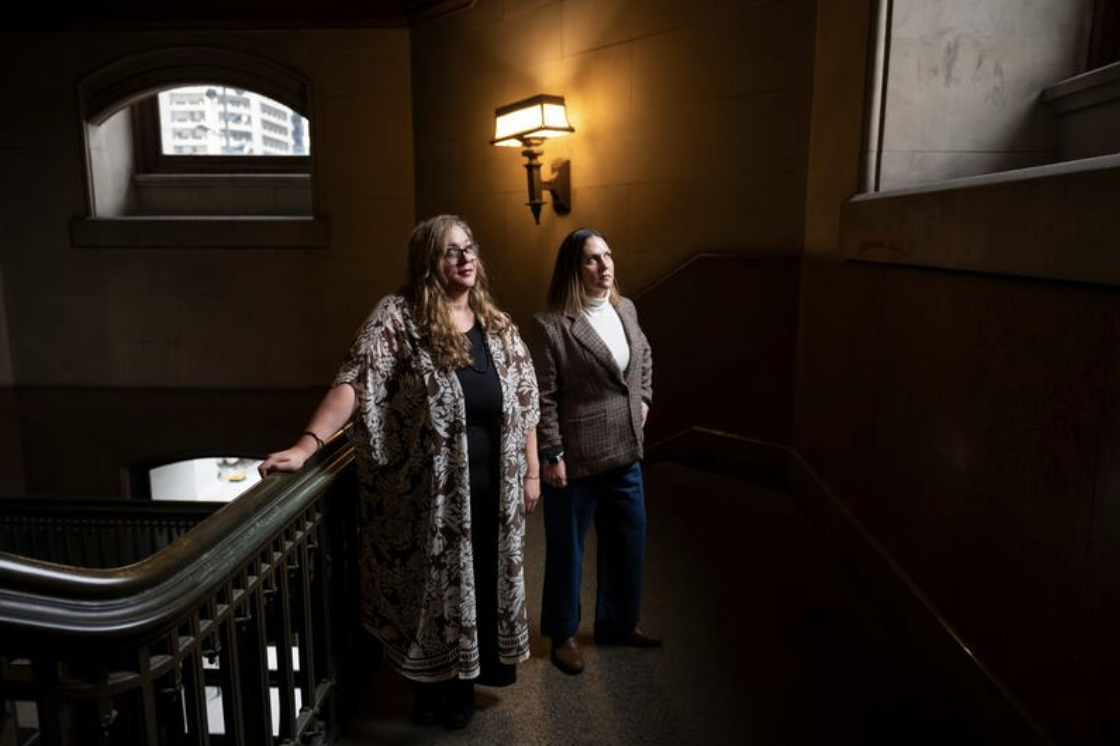
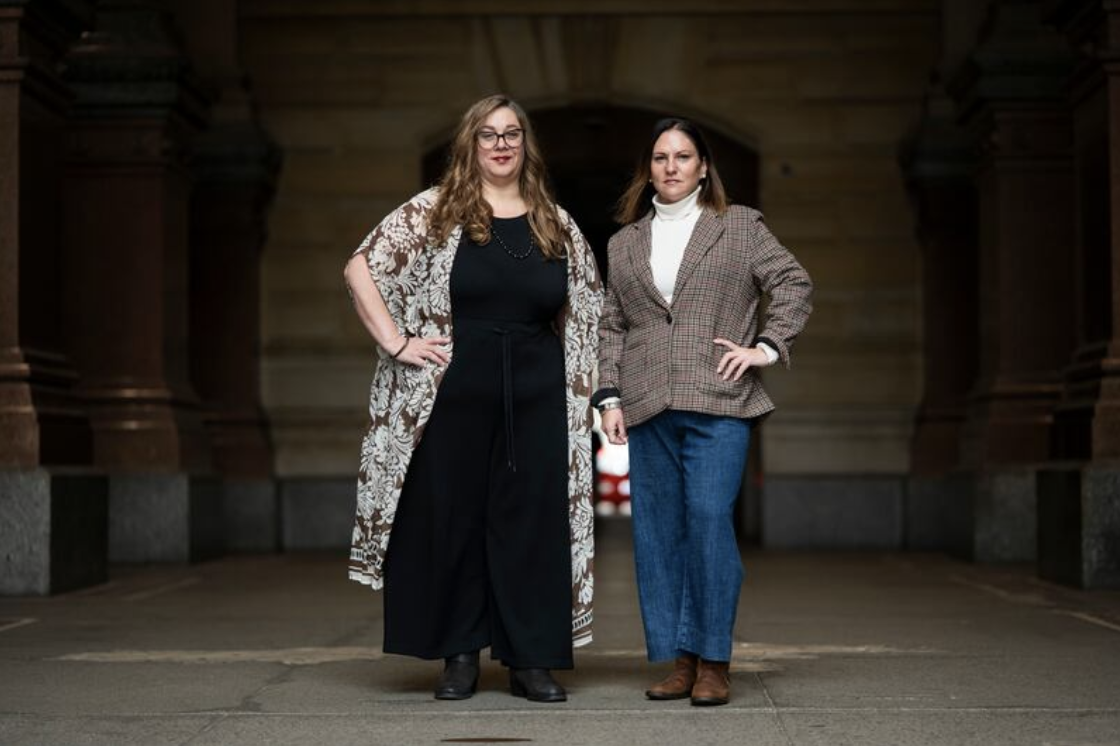
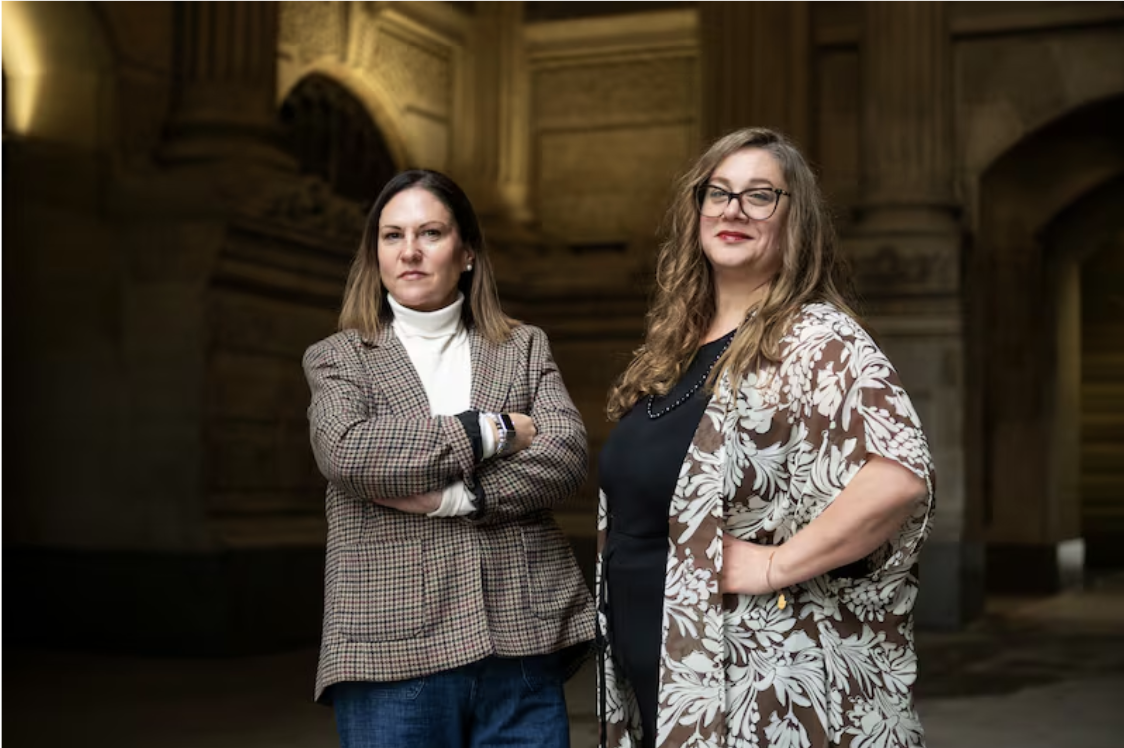
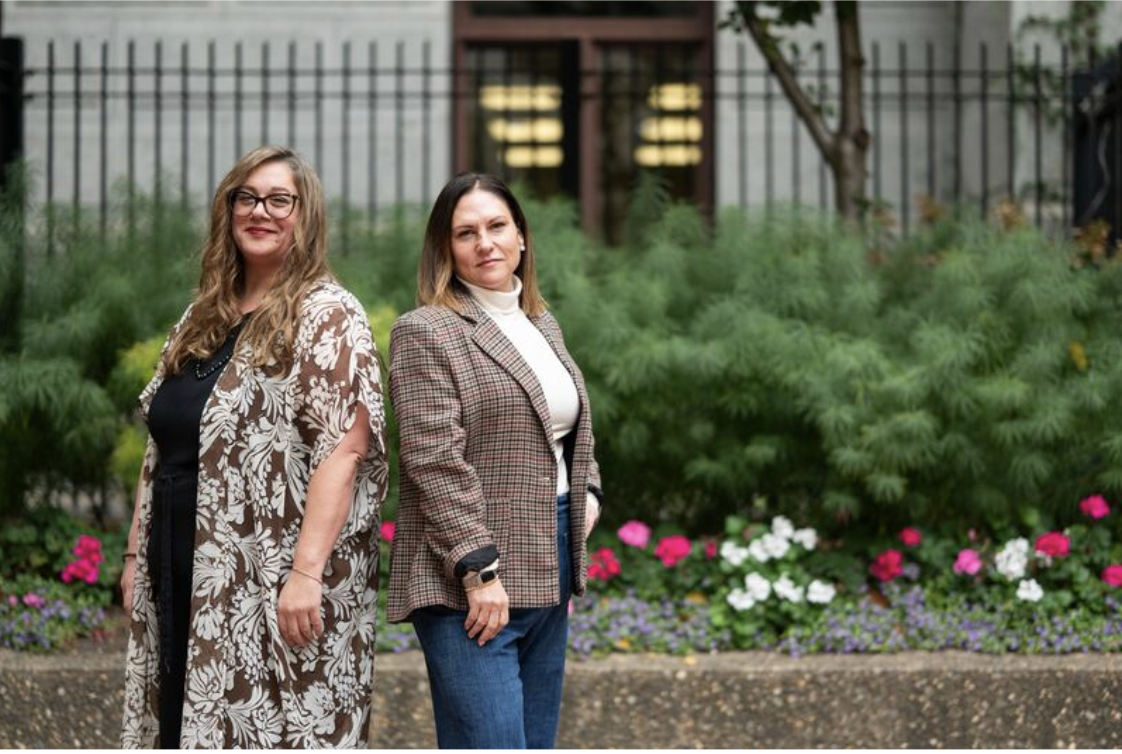
When Pinkenson stepped down from the film commission in November 2024, after three decades at the helm, it fell upon longtime employees Erin Wagner and Nicole Shiner to carry forward the work of their charismatic mentor.

It’s been a year since they stepped into their roles as co-executive directors, and Shiner said the 20 years they spent under Pinkenson’s wing have begun to pay dividends.

“Having someone who’s been in the position for so long, and who had such a grand reputation and did so much for the community, it’s been hard coming in after her,” she said. “But the good news is, [Wagner] and I have been here for 20 years. We have a lot of institutional knowledge about how to move forward.”

The past year, she said, has drawn expected challenges. Among them is the loss of longtime film office director Joan Bressler, whom Pinkenson hired six months after becoming executive director. Bressler retired in August after 30+ years at the film office.

“She ate, slept, and dreamed of local film,” Wagner said. “She is an amazing woman who ran every program the film office had.”

Without the film office’s most tenured and recognizable leaders at the helm, Wagner said, the duo spent the past year reintroducing themselves to government officials, Hollywood executives, and members of Philly’s film community. The goal was to establish themselves as trusted resources and to showcase their “fresh, down-to-earth approach” as film office leaders.

“We talk up our local crew, our tax credits, our locations, and just remind people that we’re a short drive from New York. We’re close to D.C.,” said Wagner, who has spent many years as the film commission’s production coordinator. “We have an international airport, and we have some of the hardest-working crews in the film business. Don’t discount us.”

“[Pinkenson] taught us very well,” she said. “But at the same time, we’re different people and a different generation, and we just want to remind people that we’re here to help.”

Producer Nancy Glass, who has spearheaded several true crime shows filmed in the region, said Shiner and Wagner have been integral in making her projects come to fruition.

“They are very active and very helpful. They have time for everybody, and that’s really impressive.”

As the new faces of the film office, Wagner and Shiner have made use of their strengths. “I think we really do balance each other out,” Shiner said.

While Wagner handles the “new world of politics,” Shiner has taken on the financial side of the operation. She oversees available tax credits, finance fees, and other operational costs associated with the nonprofit organization.

Wagner’s connections with local crew members have been a boon.

During the filming of the HBO crime drama Task, 777 Pennsylvanians were hired as local crew, cast members, and background players for 177 days. Shiner said the production accounted for a $230 million economic impact on the region.

“We already know how great Philly is,” Wagner said. “The rest of the world’s finally catching up. Even though some of the projects may not have been filmed here, they may have come down for one or two days. But that puts our crew to work, and that’s what we’re happy to see.”

The duo are also building programs in direct support of emerging filmmakers.

Shiner and Wagner have entrusted Daniela Galdi, the new director of filmmakers, with relaunching the long-running Set in Philadelphia Screenwriting Competition.

The competition, now called the Joan Bressler Set in Philadelphia Screenwriting Competition, in Bressler’s honor, is open to all screenwriters who submit a screenplay for a feature-length project or original TV pilot that can be shot in the Greater Philly area. All genres are welcome.

The final deadline for the competition is Nov. 20, and the top winner will be awarded $10,000 to fund their future Philly-set project.

In the new year, they also plan to develop training workshops and hands-on programs to keep local crew members equipped with the latest production technology and techniques, ensuring they have the skills necessary to work on upcoming productions.

“Film is always changing,” Shiner said. “There’s always new technology, and if we don’t keep up and provide that education, those workshops, and the opportunities for people to learn about their craft, our workforce will suffer.”

The yearlong transition, Wagner said, has been “eye-opening” and “humbling.” She’s optimistic about the duo’s relationships with county partners and local legislators, and she’s thrilled for the future productions coming to town.

“I think that these people see a future in film and television and media and workforce development with us, and they see that we’re knocking on doors and don’t plan on leaving,” Shiner said. “We want to forge our own legacy. Not only follow [Pinkenson’s] footsteps, but create our own.”

While they remained tight-lipped on projects coming to the Greater Philadelphia area, Shiner and Wagner teased that there will be something big for the region’s true crime junkies.

– The Philadelphia Inquirer

Penn Museum unveils a new gallery that examines the struggles and resilience of Indigenous nations

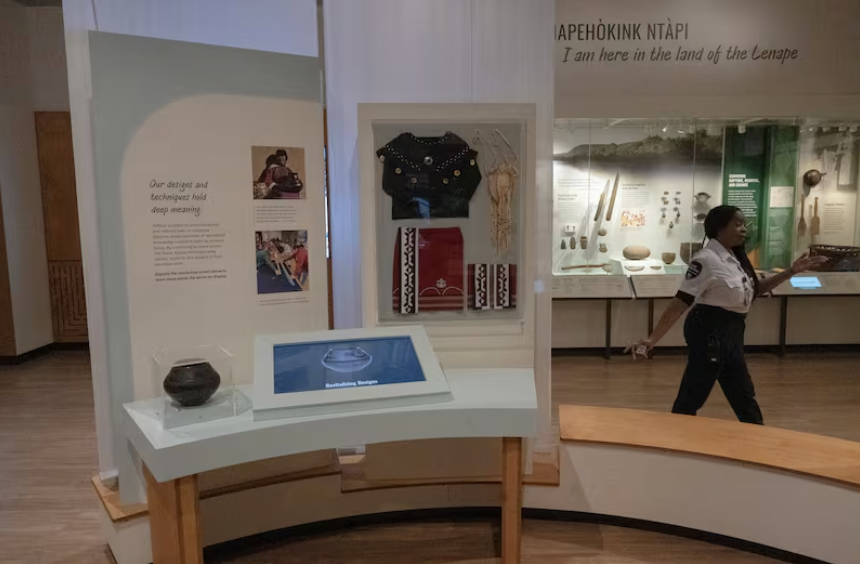
For more than a decade, the Penn Museum has offered visitors an encyclopedic history and perspective on Native American history, with artifacts spanning from Alaska tribes to communities in the southernmost part of the continental United States.

On Saturday, the museum unveiled a new gallery showcasing the artistic, linguistic, spiritual, and revolutionary traditions of Native Americans across the country.

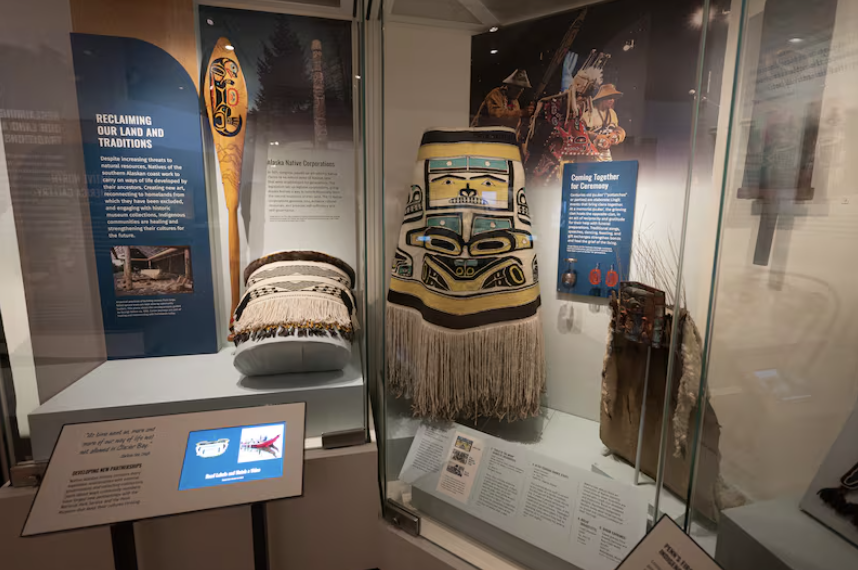
The Penn Museum’s "Native North America Gallery: Rooted in Resilience. Resisting Erasure" exhibit features more than 250 cultural items and art pieces.

Christopher Woods, Williams director of Penn Museum, said the new gallery builds on the institution’s expansive Native American collection while offering insights into the lives of Indigenous Americans today. It builds on a former gallery, which similarly focused on first-person narratives and consulted with Indigenous curators.

“We’re an archaeology museum, but this is really about Native American people today, and drawing on the connection between the past and the contemporary world. It’s important to show people that these are vibrant communities,” Woods said during a press preview. “Showing how strong they are, the nature of their resilience, the historical and cultural erasure, and having them speak in their own words is important.”

These works, which build on the previous exhibition, "Native American Voices: The People - Here and Now," that closed in July, offer a reframing of Native American history from four regions of the United States, including the Lenape Natives of the Delaware.

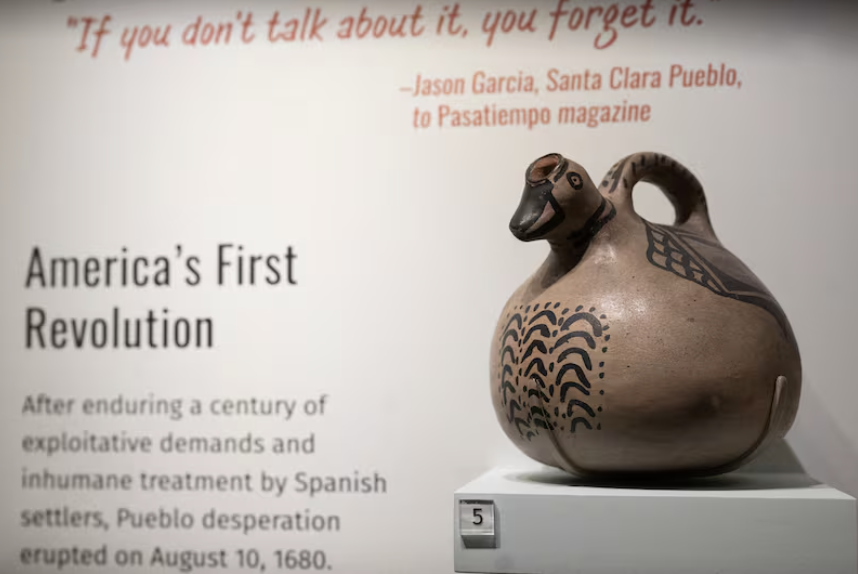
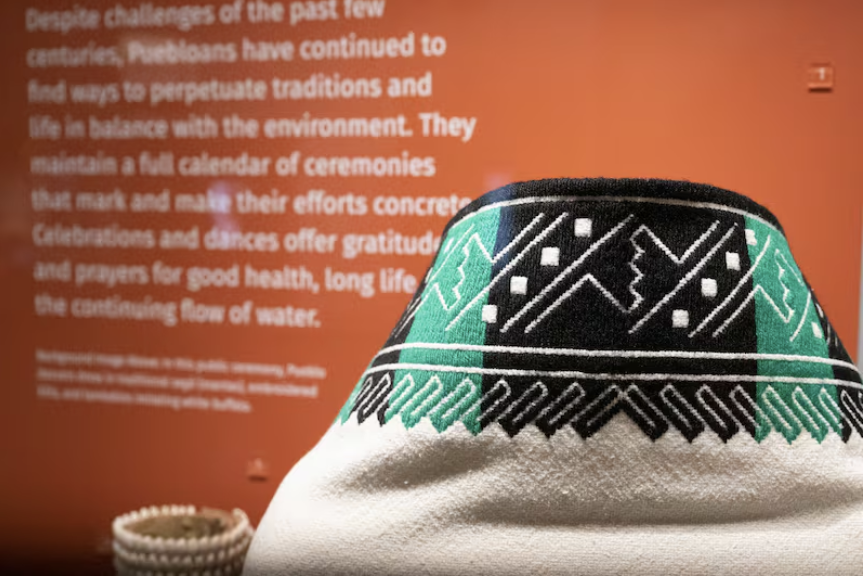
The immersive, multisensory exhibit includes a floral beadwork collar from the Northeast Lenape, a single-weave square basket from the Eastern Band Cherokee in the Southeast, a centuries-old clay ancestral mug from the Pueblo people of the Southwest, and a fringed ceremonial robe, known as a Chilkat blanket, from the Tlingit people of the Northwest.

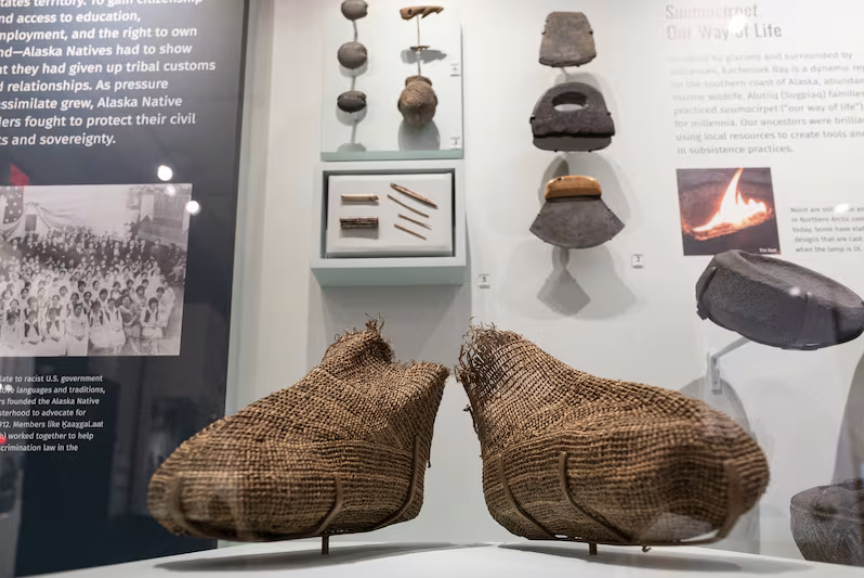
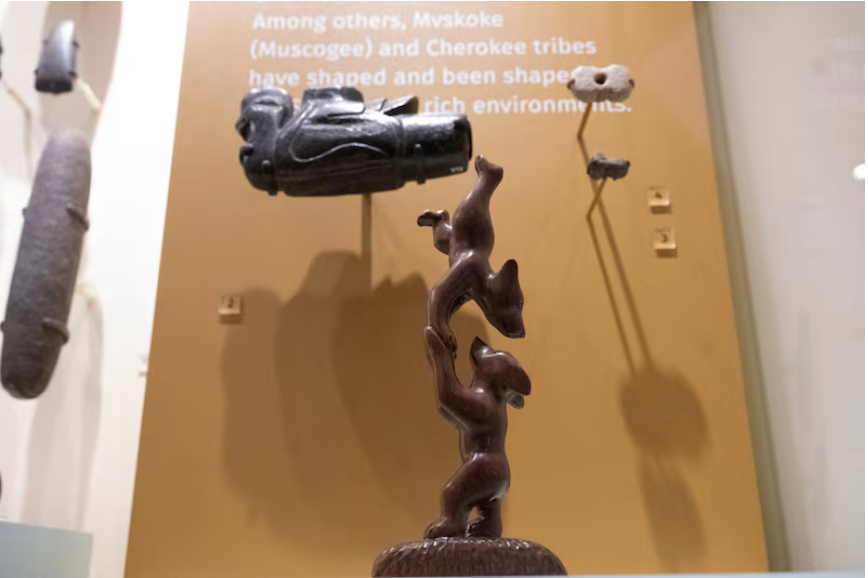
Among the oldest items on view are chipped stone tools historically used by Native Americans, which were pulled from the Penn Museum’s collections. The newest items include a woven piece that was commissioned from Cherokee mixed media sculptor Brenda Mallory.

The gallery also includes images of regions the tribal nations have inhabited, interactive displays offering insight into the formation of their cultural items, tools, and regalia, and varying stories about their traditions, challenges, and resilience before and after European contact.

Alongside co-curators Lucy Fowler Williams and Megan Kassabaum, this comprehensive gallery was developed by cultural educators, archaeologists, and historians who are direct descendants and members of the tribal nations featured in the exhibit.

Among the eight Indigenous consultant curators, who served as narrative guides, were Jeremy Johnson, cultural education director of the Delaware Tribe of Indians, RaeLynn Butler, secretary of culture and humanities of the Muscogee (Creek) Nation, and Christopher Lewis, cultural specialist of the Zuni Pueblo.

The consulting curators assisted in creating the narrative flow of the gallery and worked with the Penn Museum to recover lost history and study their ancestors’ practices. They also contributed their own art and cultural items to the gallery.

Upon seeing the exhibition for the first time on Thursday, Johnson said it was an “emotional moment.”

“It was overwhelming,” he said. “It’s not just a room with a bunch of paintings or drawings. These are actual people I lived with, know, and are related to. I can tell you about every person here. Being able to give our tribal citizens, considering everyone is a relative, a voice was really emotional. We’ve always been seen as relics of the past.”

Kassabaum said the concept of the exhibit began four years ago, but many of the gallery’s elements were shaped by the consulting curators, who willingly shared their stories and welcomed Kassabaum and others into their communities.

Kassabaum and other Penn Museum consultants traveled to Oklahoma to spend a week with members of the Delaware Tribe. They brought back four items, including the floral beaded collar, and let their protectors relay how they were made.

Those kinds of connections can’t be made without the help of the consulting curators, Kassabaum said.

“These aren’t my stories and they’re not my experiences,” he said. “I have not experienced any of the trauma of these communities. I have not experienced the joy of these communities, and everything people have been willing to share with us has been incredible. … No matter how giddy or passionate I am about anthropology and archaeology, I can’t bring the same thing to the gallery. It was totally essential.”

Unlike other exhibitions sprawled throughout the country, Johnson said Penn’s inclusion of him and his Native “relatives” was based in good faith rather than historical or cultural exploitation.

“We know certain art museums have been problematic in the past, and are still doing that work,” Johnson said. “But I feel this is the first time we were asked in the right way. It was in the spirit of an actual collaboration, instead of asking for items to display, and that’s it. This was a good process, and we hope it stands as a model for future exhibits.”

The opening ceremony of the Native North America Gallery kicked off with remarks from Johnson and the other Indigenous consulting curators.

Their remarks were followed by traditional dance, songs, and storytelling by New Mexico’s Tewa Dancers. There was also an artist talk by Holly Wilson of the Delaware Nation, curatorial presentations led by Johnson and Joseph Aguilar of the San Ildefonso Pueblo, and a series of family workshops.

The gallery, which is now on display, is available for online and in-person viewing.

Visitors can reserve guided, in-person tours on select days. Tickets are priced at $26 for members and $30 for general admission. For more information, visit penn.museum.

– The Philadelphia Inquirer

An artist started befriending strangers in Pa. prisons. Now she is turning them into artwork.

Over the course of three years, Carolyn Harper and Donna Martorano became fast friends.
The two women, on different sides of Pennsylvania, lived very different lives and shared few similarities. But they bonded over emails, handwritten letters, and virtual visits.

Martorano shared tales of her family, her health issues, her hopes of reconnecting with her two sons, and her growing sense of detachment from the outside world.

They spoke daily, but before they could meet, Martorano died in July 2024 at age 74 at the State Correctional Institution in Cambridge Springs. She was serving a life sentence without parole for first-degree murder for contracting two men to kill her husband in 1992.

The official cause of her death was a heart attack.

Harper said Martorano’s past and conviction weren’t the end of her story. In the 32 years she was incarcerated, Harper said, Martorano became a certified braille transcriber and took violence prevention and mentoring programs.

But in her later years, she grew increasingly “bitter,” Harper said. Martorano was confined to her bed and wheelchair and was often bullied as her health worsened.

“Her spirits were crushed,” Harper said. “I really feel she died of a broken heart because she was not given institutional support. A lot of prison administrators just don’t care. She told me she had nothing left to live for.”

For the past five years, Harper, 60, has connected with dozens of other incarcerated people, some with stories similar to Martorano’s and others with far different lives.

These stories, Harper said, opened her eyes to the emptiness, detachment, and inhumanity people experience in prisons.

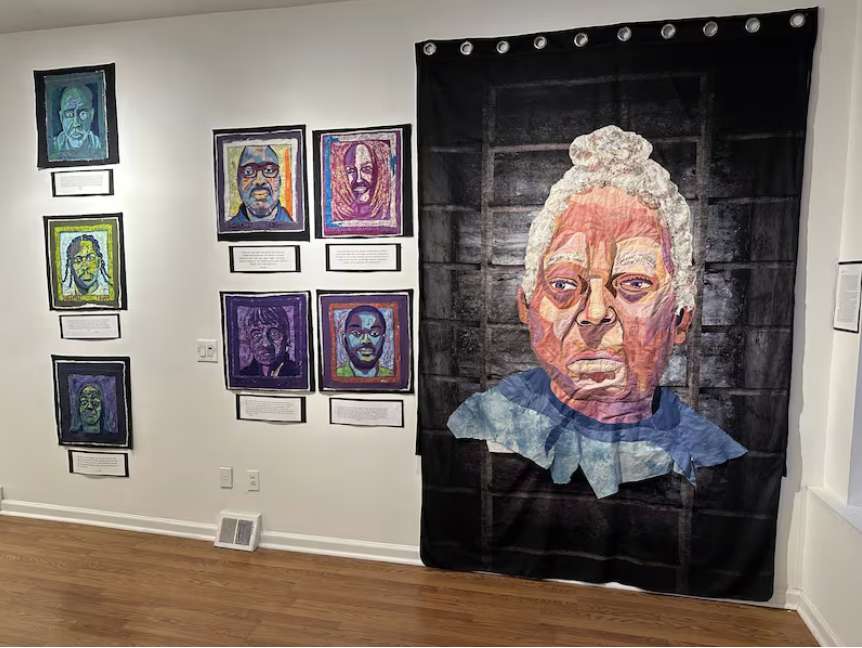
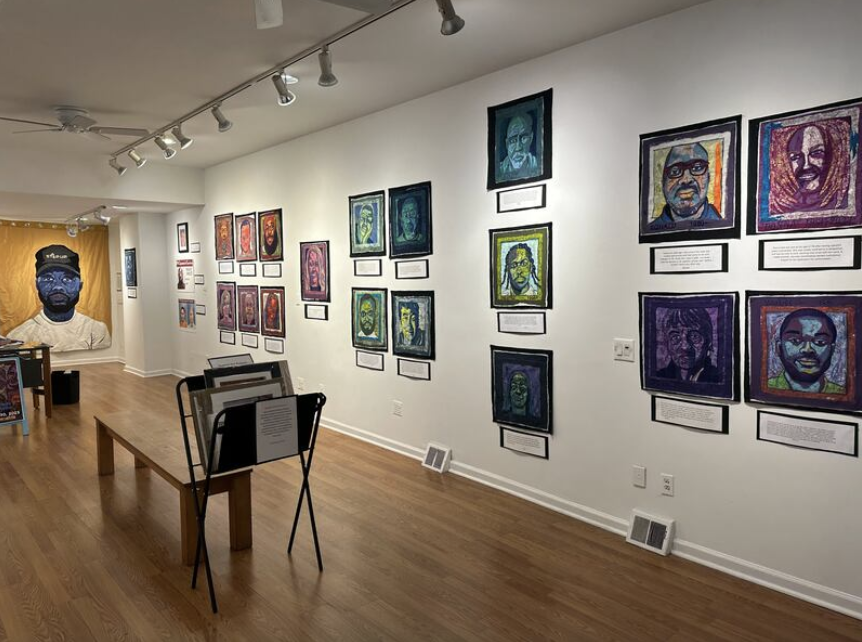
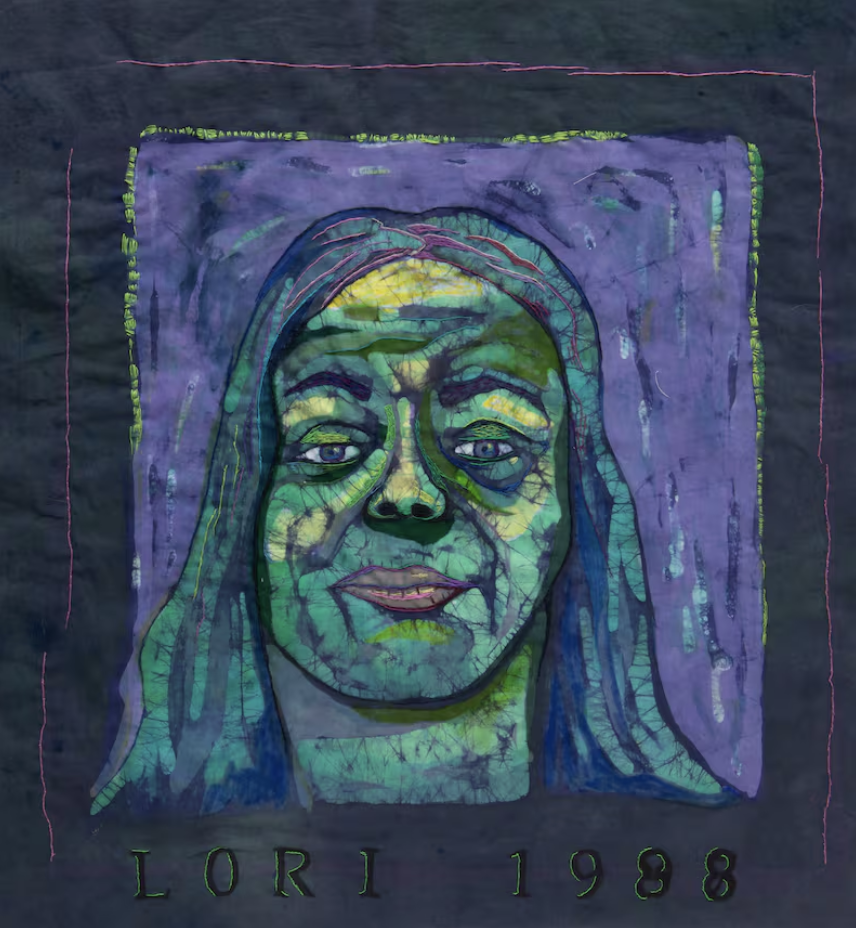
Their names, faces, and stories are now at the center of her latest portrait series, “Prison Portrait Project: Faces of Despair, Hope and Transformation," on display at Old City’s Muse Gallery.

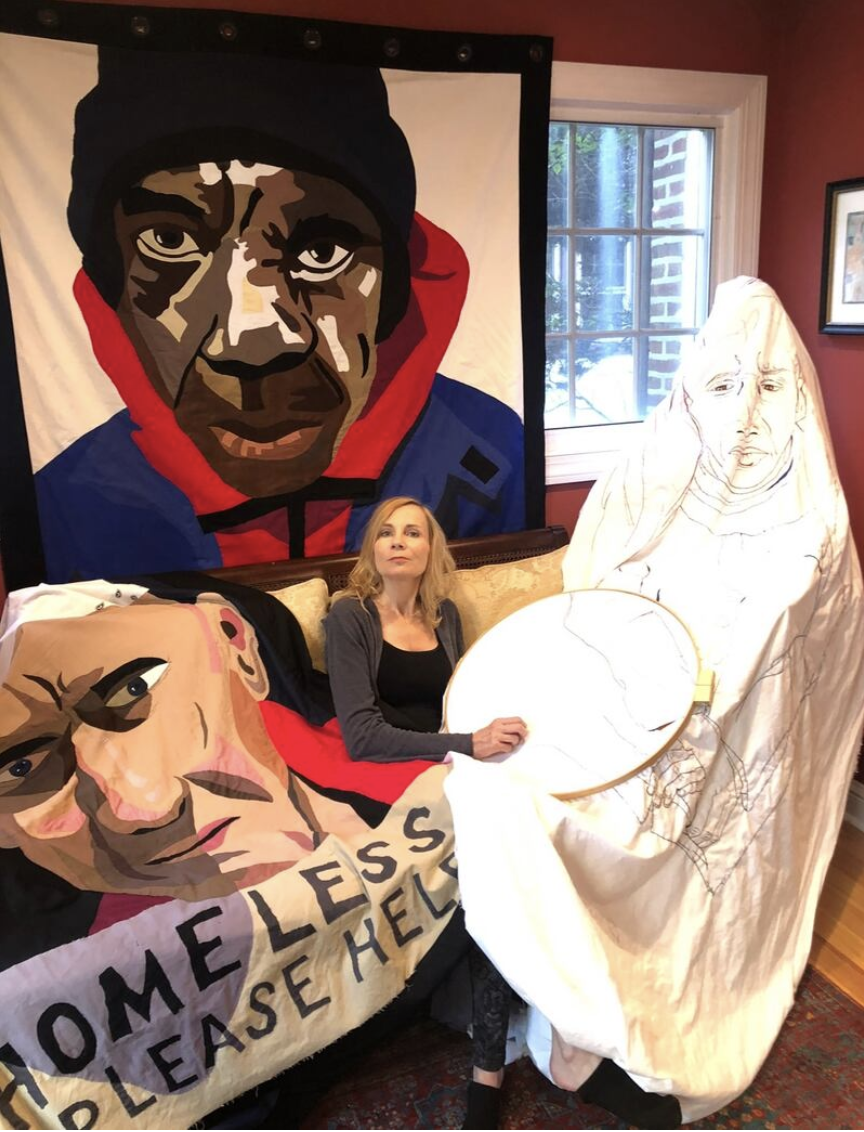
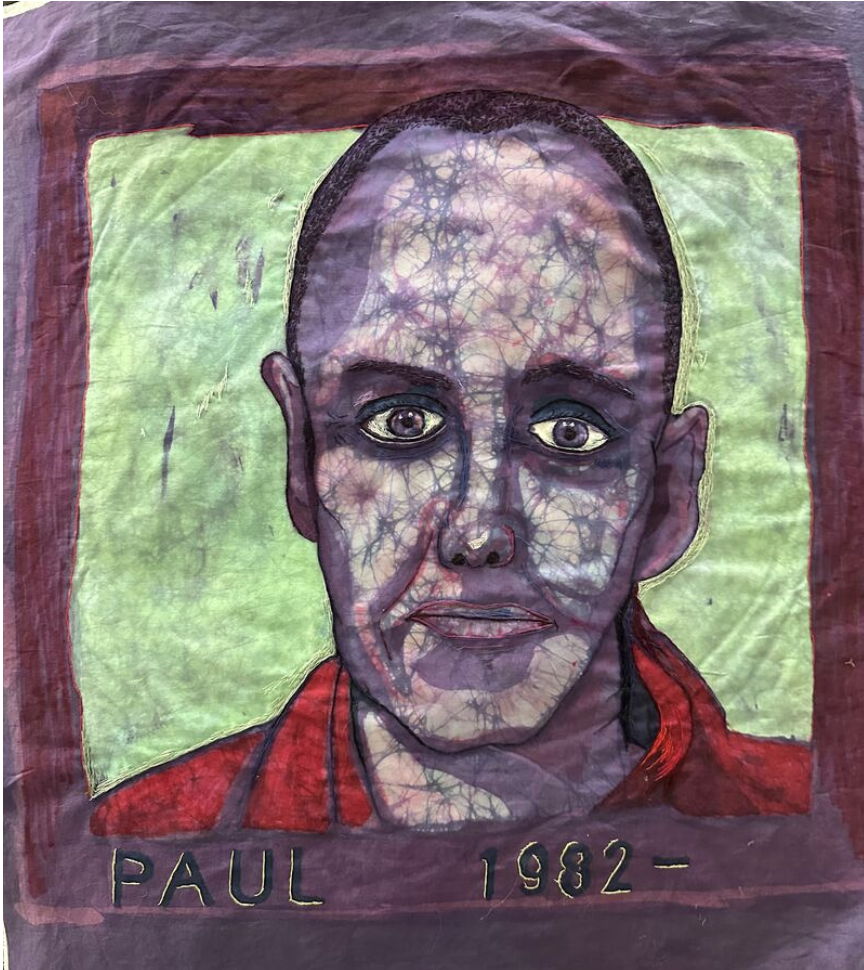
Harper has placed their portraits on hand-sewn quilts and vibrant batiks, transforming the faces of those suffering from the country’s carceral system into artwork.

Like Martorano, several of Harper’s subjects are serving death sentences, with little to no path for early release or commutation. Harper has never asked specific questions about their pasts, and everything she knows about them is what she has been told voluntarily. But she’s certain about one thing: None of the people she has befriended is the same person they were when they were first incarcerated.

Pennsylvania, she found out, is one of two states in the country that has a mandatory life without parole sentence, known as “death by incarceration,” for both first-degree and second-degree felony murder.

“I have come to see that guilt or innocence, while important, is not the critical thing here,” Harper said. ”It’s the idea of redemption and rehabilitation. This, to me, is the real story — the story of transformation.”

For decades, people suffering from abuse, discrimination, and disenfranchisement have made their way onto Harper’s quilts.

In the mid-1990s, she created panels for the AIDS Memorial Quilt, a visual project that memorializes the hundreds of thousands of Americans who died from AIDS-related causes at the height of the epidemic.

She also developed a series of textile portraits championing queer love stories, and another shedding light on the systemic issues faced by those wrestling with dispossession and homelessness.

“People often come out of prison and don’t have a pathway to find a real job or housing,” Harper said. “I started to see that connection, and I became interested in the issue of incarceration.

“We pay lip service to this idea that prison is reformative, but really it’s punitive.”

Born in Rochester, N.Y., Harper moved to Philadelphia in 1989 to study art at the University of Pennsylvania. Her days volunteering as an art teacher at local homeless shelters from 2013 to 2020 are what first drew her to the links between homelessness, dispossession, and incarceration. She was driven to learn more about the state’s prison system.

After her best friend was arrested in 2020 for abusing his husband, Harper’s interest became a lived reality. The health of her friend, who struggled with addiction and mental health issues, worsened due to his incarceration. Shortly after his release in 2021, he took his own life.

That pushed Harper to join organizations such as the Coalition to Abolish Death by Incarceration, We The People Coalition, and others. She wrote postcards, letters, and emails to incarcerated people throughout the state.

Before this, a self-described “snowflake,” Harper would veer away from conversations about incarceration. She started out fearing that she wouldn’t be able to emotionally cope with the struggles incarcerated people endure and write to her about in their letters. But she grew to become a listening ear, resource, and friend to people seeking human connection.

Through her hand-sewn and fabric-dyed portraits, she encourages her audience to step outside their worlds and enter the worlds of her subjects. Through her art, she highlights the forgotten humanity of incarcerated people and uses their testimonies to draw attention to Pennsylvania’s “harsh sentencing laws,” and correct the misconceptions people hold of those who are incarcerated.

The “Prison Portrait Project” started off with Harper writing to the people whose names, faces, and stories make up her art. Would they send her a photograph, she asked, and consent to be a part of her exhibition?

Most replied with a photo or told Harper where she could find one. Others had family members send photos to her. After she sewed them or transferred them onto quilts, Harper shared images of the final pieces with the subjects of the expressive portraits.

“I think seeing their self-portrait, and knowing it’s going in an exhibition, helps them see themselves in a different light. And that can be empowering,” Harper said.

Each quilt and batik-style image features a written statement from the person who inspired the portrait, ensuring their stories (along with their faces) are integral parts of the exhibit.

A binder containing more stories, statements, and poems written by people Harper connected with through the years, sits at the front of the gallery. Three self-portraits of incarcerated artists are also on display.

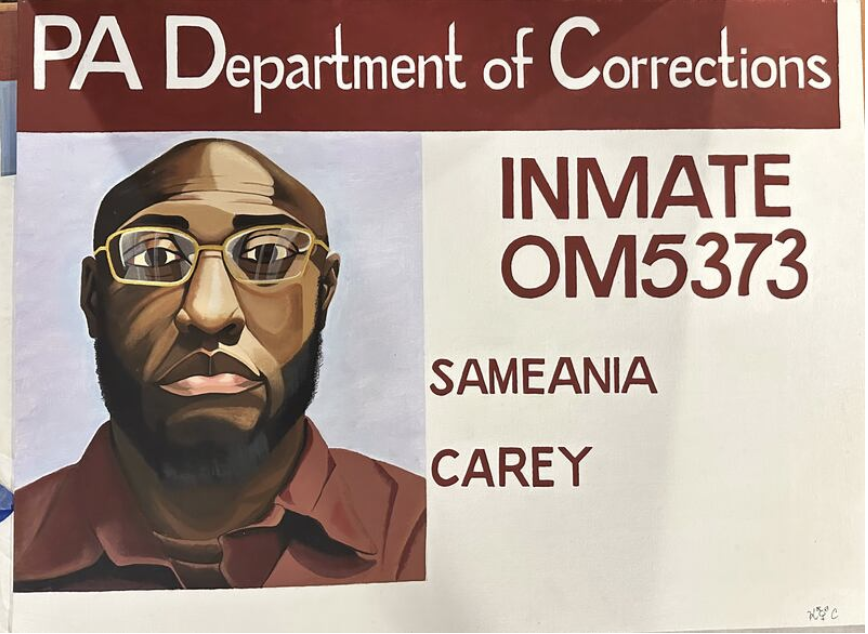
Harper is hopeful the show will inspire audiences to view those who are incarcerated as people, rather than lifeless serial numbers and charge sheets.

“Most of us don’t think about people in prison. If we do, it’s sort of with the feeling, ‘Well, they probably did something and deserve to be there.’”

She wants people to recognize the lack of redemptive pathways for people upon release, and the need for advocates to protect, defend, and humanize Pennsylvania’s incarcerated population.

“Prison Portrait Project: Faces of Despair, Hope and Transformation,” through Nov. 30, Muse Gallery, 52 N. Second St., Wednesday to Sunday, noon to 5 p.m. musegalleryphiladelphia.com

– The Philadelphia Inquirer

The West Philly rapper whose work has landed on ‘Abbott Elementary.’ Twice.

When Philly artist Amir Bey Richardson first uploaded his rap songs online in 2010, he was told his music was “too corny” to garner an audience.

“I definitely had friends who encouraged me, but I had other friends who used to call it ‘bus driver rap,’” Richardson said. “Or they said, ‘Too many people rap. Get out of here.’”

Today, Richardson is a go-to musician-for-hire for major network shows, including for the Emmy-winning, Philly-set comedy series Abbott Elementary.

Richardson, who goes by Bul Bey, knows his music doesn’t have the same musical edge that has long defined Philadelphia’s hip-hop sound. But he makes up for it with his more soulful and personal hip-hop records that speak to his West Philly roots and connect with a wider range of rap fans.

“Philadelphia is one of those cities where rapping is held to a higher standard, so I had to listen to my heart,” he said. “I was an artist whether I wanted to be one or not.”

While his sound didn’t match that of his contemporaries, he believes it sets him apart from other Philly artists.

On the Oct. 22 episode of Abbott Elementary, Richardson’s 2024 track “Elbow Deep” can be heard in the background as characters Gregory and Janine (played by Tyler James Williams and show creator Quinta Brunson), set the vibe for a friendly hangout.

“I lost my mind when I heard it,” Richardson said. “There are some explicit moments in the song, but when I saw the scene, it all made total sense.”

This was the second time Richardson’s music was placed in the hit series.

Back in February 2022, Richardson sent an “awkward” introductory message on LinkedIn to Abbott Elementary music supervisor Kier Lehman. Among the tens of tracks Richardson pulled from his catalog to include in that message, the 2014 single “Where I’m From” struck a chord with Lehman.

In early 2023, the Grammy-nominated music supervisor reached out to Richardson to request the use of “Where I’m From” for season two, episode 19, of the show.

Richardson said he’s still processing the achievement. “Sometimes I go back to the episode just to make sure it wasn’t changed,” he said.

That song placement, Richardson said, arrived at a “time of desperation.”

After a decade of making music, Richardson was at a creative crossroads. He was confident in his musical talents, but it felt like there were limited avenues to showcase them. “I felt very lost and desperate,” he said.

He stumbled onto Abbott Elementary like everyone else. Only he paused the TV to find Lehman’s name in the credits and reached out to him months later on the networking platform.

While he’s now “embarrassed” by his direct message to Lehman, the eventual song placement was the first time Richardson was ever paid for his music.

“That was definitely me crossing a threshold,” he said. “And in my mind, I was like, ‘I have to do that again.’”

It would be two years until that would happen. Earlier this year, Lehman reached out to Richardson to use “Elbow Deep.” Richardson approved immediately.

In the meantime, that first placement opened several creative doors.

Between his role as an event coordinator for the Free Library of Philadelphia Foundation, Richardson dropped a pair of collaborative EPs with producers Sam Live and Patrick Feliciano. He also contributed music to WHYY programs, such as Albie’s Elevator and The Infinite Art Hunt, and served as host of the Franklin Institute’s So Curious podcast.

He was even tapped to narrate a Skechers ad featuring Sixers star Joel Embiid, showcasing his abilities as a voice-over talent.

It’s all been a surprising path, Richardson said. One that has inspired him to pursue avenues that meld his love of music and Philadelphia.

“It let me know I had a narrower view of what I could do as an artist,” Richardson said. “I wouldn’t say I’m doing unconventional things, but it’s more of a wider range.”

His goal is to be a more notable name for big-budget shows and eventually land a placement on a blockbuster film. He currently has his sights on Sony’s animated Spider-Man multiverse saga, which Lehman served as the music supervisor for in 2018.

For someone who started out making songs from his college radio station at Pittsburgh’s La Roche University, and now sees his name on TV screens, Richardson has learned to avoid limiting his art and musical reach. And to the friends who previously doubted his abilities, he’s proving his music can take him places he’s never been, including prime-time television.

– The Philadelphia Inquirer

Keke Palmer Gets Raw On 'Just Keke': How The Multi-Hyphenate Reclaimed Her Narrative & Entered Her "Awareness Era"

Keke Palmer has made the evolution from child star to Hollywood empress look seamless. Whether it’s on set of a blockbuster movie, along the red carpet, or in the podcasting space, the actress, author, and entertainment mogul has remained the same Keke she’s always been.

For more than two decades, Palmer has been steadfast in her pursuits and intentional with her public image. She’s taken on bigger and more mature roles as an actress and launched KeyTV, a Los Angeles-based digital network that produces scripted and non-scripted shows starring other industry talents. As she’s expanded her horizons and ping-ponged from one big budget project to the next, she hasn't taken her sights off music. 

Palmer has continuously poured into her music career. Beginning with 2007’s So Uncool to her newest release, Just Keke, the pop and R&B singer has gradually found her artistic footing. With the release of her latest album, Palmer has  shed the immeasurable weight of perfection that she carried for so long on her shoulders. 

Palmer has effectively abandoned the charismatic Hollywood persona reflected in her TV and movie roles and hilarious viral quips. Rather than disguise her anger, confliction, or heartbreak harbored since her last project, 2023's Big Boss, Palmer shed her previous "mask" in exchange for a mirror. Just Keke reflects the most authentic parts of Palmer's Hollywood star and Lauren, the girl from Harvey, Illinois who’s outgrown the small talk, lingering hangovers, and romantic drama. 

Released on June 20, Just Keke is Palmer’s rawest musical project to date. The album, and accompanying visual album, explores Palmer’s family life, her journey as a new mother, and her very public breakup. Throughout the album, she addresses her contentious split with Darius Jackson, and how her seconds-long dance with Usher at his Las Vegas residency in July 2023 placed an irreparable wedge between them. Rather than address it on social media, Palmer was compelled to put it to wax. 

Along with the pain of heartbreak, Palmer swats down the rumors and misconceptions that circulate online, and illuminates how motherhood and her recent experiences have made her an even firmer protector and believer in her future aspirations. GRAMMY.com spoke to the multihyphenate about her musical journey, how her role in an upcoming Boots Riley movie inspired her to get back into the studio, Issa Rae’s advice to go "Off Script," the honor of being memed, and her hopes to take her son, Leo, on tour for the album. 

The interview has been lightly edited for length and clarity.

Between movies, TV shows and your podcast, how do you have time for music, especially a new album?

The conversation always leads you, meaning I don’t always have something to say for an album. I feel like in order to put an album out, you have to have a topic. A lot of the other things I do are collaborative projects, so it’s somebody else's words or it’s a role, or even hosting is just a curiosity of life. 

But with [Just Keke], it’s like me putting all of my thoughts together — everything that I feel like I’ve learned or I want to reflect from society. It really guides me. Once I feel that feeling, then I make the time to put that project together. Otherwise, I kind of allow myself to keep living until that itch comes back. 

You even recorded Just Keke while filming a new film. What was that balancing act like?

It was something I needed because, as I said, that itch came back. I was working on this project for a while, and I was working on [the Boots Riley film, I Love Boosters]. I think being in that energy I was like, I think I’m ready. I should start trying to get my words out

Every night after I was on set, or on the weekend before I went back to start my week, Tayla Parx and Ispent about four days working on the project. And it just gave me that break that I needed. Sometimes when I’m doing one thing for a long time — whether it be a TV show, a movie, or my podcast — I need to mix it up. I needed to do something different, and it happened to be music. I was also ready to tell my story for this time period of my life. 

It’s been two years since Big Boss. How was your approach different this go around?

Well, I think I'm a way different person, and my conversation is different with myself. People say this is my most personal album, and I agree. Not because I was being fake on the other ones, but because anytime that you are deeper with yourself, it just changes the way you speak and communicate with others. It’s like a lived experience that just evolved me in a way that I didn’t even know I could evolve to. It just opened up a different perspective for me that you hear in the music.

This album was a peeling back of the layers and showing the world an insight into the life of Keke the entertainer, and Lauren the person. Were there any moments you thought might have been a bit too close to the chest?

Yes, and that’s the reason why I wanted to work with Tayla on the project because she was somebody that I trusted; not just because she’s so skilled, but because she cares about me. 

My [relationship] with my audience is communal. I’m a Black girl, I’m a Black millennial, and I’m a young person — I take all that seriously. That’s how my parents raised me with my platform. But at the end of the day, I’m a human being. People saw me, in the most public way, go through a very human experience. So, as a person and as an artist, not to address [the public breakup] would be a halt in my growth as a person. I didn’t want to exploit myself, but I wanted to talk about how this has impacted me… how the relationship impacted the way I perceive myself, and all the other ways that I needed to grow and heal.

It was kind of the inciting incident that allowed that barrier of feeling, that weight of perfection to kind of crumble. 

You dug deep on "My Confession." Was there a moment where you thought, Damn, maybe I went too far?

There absolutely was. And by the way, we went through that with every song, damn near. From "Off Script" to "Misunderstood" and "Expose." We went through that multiple times, but definitely with "My Confession," especially with the family line. I was thinking, Well, how much can I say? How were we going to say it?

The way [Tayla] produces projects, it’s not just what I’m saying. It’s also how I’m saying it, the inflections and the vibe. You really get to tap into the energy of how I feel that I’m confessing. I’m truly getting this s— off my chest that I need to get off, and it hurts to get it off my chest because I’m not trying to make nobody look crazy or look bad, but it’s part of my life. And I need to own my truth. 

It was very much a back and forth type of thing where I’m thinking, Damn, is this too messy? But music is your diary. Music is a big, deep expression for any artist that’s trying to be true. Again, it wasn’t that other projects I wasn’t trying to be honest. I didn’t have these experiences to realize that. The music went further on Just Keke because I further as a person. 

How would you define this new personal or artistic era you’re in?

I think this is like an awareness era; a true observational era in moving from just being the performer to also presenting to my audience that I'm the architect. Like, this is what Keke Palmer the brand is going to be talking about this season. 

With Just Keke, it’s clear that I’m talking about fragmentation, integration, and what it means to be a product. I’m talking about becoming who you are in front of the world. I'm talking about your love life and your love story not turning out the way that you want it. But I'm doing it with artistic awareness, while I also take you through the journey as the business and the creative person behind it. I put this together to transmute my personal experience, but in an art form. I’m taking off the mask, so to speak, and saying, "Hey, this is what I’m doing, why I’m doing it, and how I’m doing it." 

In another interview, you said this album was about, "Turning your mask into a mirror." Break that down for me.

I call my fans my miracles. I never called them anything before because it always felt kind of strange to me. But then after this experience, I was just sitting with myself and looking at my life, I thought, They’re my miracles. They saw it in me before I saw it for myself. 

And we’re reflecting each other back to one another. Anytime you get memed, it’s because people see themselves in you, and that’s the biggest and greatest honor. I think I have a unique relationship with my generation. I feel mirrored by them, and they feel mirrored by me. I think that’s really special because that means they see the truth. 

As a performer, I always try to keep it on point. But whether it was at the Met Gala, when I said, "It’s your girl," or when I did Vanity Fair and I said, "Sorry, to that man," they saw the real person. Even though I was trying to be as perfect as I could, they already knew I wasn’t perfect. And that’s what they love about me. And for me, it’s about taking off the mask and owning being in front of the mirror. Being that mirror for them, and being that mirror for me. 

Within the last two years, you became a mother. How do you feel motherhood has inspired you creatively, or even beyond music?

Motherhood has just made me braver. I think that's spilled into everything that I do — the ability to just have the courage to say "no" and have boundaries. To be firm in times when I was it wasn’t as easy to do it myself, but I knew that my son was watching. I knew this was going to affect my son because it’s going to affect me. 

I think it’s hard sometimes for people to stand up for themselves, even for the most confident people you can think of. It can be tough, but when you have a child, it becomes so detrimental. The child needs you, so you become stronger, braver, and more loving to yourself simply because you need to be for the kid. That’s the biggest way my son has impacted my life. 

On the visual album, you honor R&B icons like Whitney Houston and Brandy. Do you see parts of yourself in them?

They’re commercial icons, but they’re also Black women. A lot of what we speak to is generally flattened, fetishized, or it becomes a mockery because of the nature of our society. When I looked at women like Brandy and Whitney, I saw myself in them and saw them trying to become who they are in front of the world. It was never enough; [even] when you’re trying to be perfect, trying to do everything right. 

I remember when Brandy first had her child, and people were shocked. And when people judged Whitney, too. I feel like it’s just a rite of passage when you decide to be somebody in front of the world. I just wanted to honor them because they deserve to be honored for who they are, not for who people wanted them to be. At the end of the day, that’s what I’m saying with Just Keke. Maybe I’m not perfect. Maybe I’m just misunderstood, and maybe I’m not everything you want me to be, but I’m doing my damn best. All I can be is Keke, just like Whitney could only be Whitney, and Brandy could only be Brandy. That’s what’s necessary as we encourage the next generation to come into their own. 

The album wasn’t just filled with heavy material. The song "Tea, Boo" is a fun, house-inspired record. How was it putting songs like those together for Just Keke?

"Tea, Boo" is obviously like my personality. I think all the songs speak to different vibes of me. But "Tea, Boo" is like, "Hey, we’re kicking back, having fun, and let’s make a moment." 

"Tea, Boo" was a lot of fun. We were in the studio, and I was literally asking for some tea. And I was like, "Okay, I have some tea, boo." And Mike, the guy who was in there writing with me, was like, "What’s tea-boo?" And I was like, "No, I’m saying tea, comma, boo." And he was like, "That’s a song." From there, we started working on this record, and it was so fun. I wrote it around the same time as my book, Master of Me, so I was in the early stages of getting back into music. I kept it in the tuck, and felt it was perfect for the album. 

You were gloating on "Ripples," and included your family in the vignette during the visual album. That had to have been a special moment.

I was showcasing the side of me I damn near forgot about myself because I was doing everything that I could to be Keke Palmer. But there’s Lauren Palmer inside that created that persona to be able to survive. But now, I don’t have to do it to survive. I can do it with intention. 

Aside from talking my s—, I also wanted to show what it means to build a legacy. To show this is what it means to play your role in your family, and to continue to do what you need to do at all costs. My family has supported me. I’ve supported them, and they won’t stop. That’s how we’re going to keep doing it. That’s how I was raised. My dad talked to me about [actors] Ruby Dee, Ossie Davis, and I remember meeting Kyla Pratt for the first time. I was so nervous that I didn’t say anything. And he was like, "You need to always show respect to the people that put on before you." He was kind of checking me, even though I was starstruck. I think about that often because he was like, "You’re not in competition with each other." We are in support of one another, and we have to give each other flowers whenever we see each other. It’s like we all have ripples that we come from, so we have to pay respect to that."  

Will you have a tour for this album? And if so, will baby Leo be on board for the ride?

You know that baby Leo has to come. I literally can’t leave without baby Leo. I would love to figure out a way. I don’t know what my tour is going to be like because I definitely feel like it has to be its own shape. I’m a musician, but how I see myself as an artist is everything at once. I want to figure out what’s the best way to do that kind of show because it has to be very much Just Keke. But doing a show and doing a tour is definitely on my list. It’s been the main thing me and my team have been talking about.

– Grammy.com

A tree that bears 40 different fruits takes root in the Temple campus

Artist Sam Van Aken grew up on his family’s farm in Douglassville, Pa.

As a result, his favored medium to create art is a process called tree grafting. It involves taking a scion, or a desired piece of one plant, and combining it with the rootstock of another. The fusion creates a single plant that either sprouts the same fruit or shares elements of the both the trees.

He was introduced to tree grafting as a kid on the farm, spending years nurturing fruit trees from seed to full bloom.

He explored other mediums for his art, but kept returning to grafting. “It always stuck in my head,” Van Aken said. “I thought it was miraculous that you could take a part of one living thing, cut it, insert it, and stick it on to another living thing. It was absolutely fascinating to me.”

Only he didn’t stop at two combinations. Van Aken, an associate professor in Syracuse University’s art department created Tree of 40 Fruit, a live tree that sprouts 40 different stone fruits, thanks to grafting.

“I always felt like I worked in partnership with the tree, but it’s also very much a partnership with the people where the trees are,” Van Aken said.

The first Tree of 40 Fruit was planted in the Syracuse campus in 2011, and there are 25 more of them in locations throughout the country including in Maine, Indiana, New York, and California. The Tree’s latest installation was planted on Temple University’s Tyler School of Art and Architecture campus on March 14.

The Temple Tree will burst out in crimson and white blooms this spring. And by late summer, stone fruits such as peaches, plums, apricots, nectarines, and cherries are likely to sprout from its branches. All the varieties, the artist said, will be specific to the kinds that grow best in Philadelphia weather.

“One hundred years ago we were growing fruit for taste. But now we grow it for how long it will last while it’s shipping, or if it will look good at a grocery store. Taste and nutritional value are like fourth or fifth priority,” Van Aken said.

Along with beautifying the Tyler School courtyard, the live sculpture will be a means of agricultural preservation, as it will grow stone fruit varieties that aren’t commercially produced or widely available. Students will be allowed to pick the fruits and eat them.

The agricultural artist often dives deep into the provenance, or the origins, of specific fruit varieties. Sometimes, it takes him back by 2,000 years.

One story involves the Lenape People who were native to the Philadelphia area. An English settler stumbled on an apple tree they had planted and wanted to buy it. “It didn’t register in their philosophy because you can’t own a tree anymore than you can own air,” Van Aken said.

The cost of reserach, labor, and maintenance of such trees “can be prohibitive for individuals,” Van Aken said. So he primarily aims to place them in public settings. “Placing the trees in a public context also pays tribute to the Lenapy philosophy that no one can own a tree only be gifted from its abundance.”

To ensure Temple’s fruit tree thrives in the Pennsylvania sun, Van Aken found a bulletin from the Pennsylvania Department of Agriculture that was released in the late 19th century. The report listed fruit varieties that were recommended for the Philadelphia area, and those are the ones he used to graft the sculpture.

Climate change, he said, “has become an overwhelming concern.” But it’s not necessarily one that hasn’t been paid heed to in the past. In Gettysburg, the site of the famous Peach Orchard battle, the Sherfy family was monitoring cold hardiness in peaches in the 1870′s “with the idea that long peach blossoms were better for colder climates than short blossomed types.”

Van Aken’s trees usually spend their first three to five years in a nursery, after which the artist carves out a plan to graft them and plant them in soil. Thereon, he visits them four or five years.

“It’s weird,” he said, “but it totally changes your perception of time. I’m like, ‘Oh, that’s a year away?’ and it feels like it’s tomorrow.”

The Tree is part of Tyler’s 8th Annual Jack Wolgin Visiting Artist program, which brings influential artists and thinkers to the campus for a free public lecture and to lead hands-on workshops with Tyler students.

“Sam’s work is absolutely ideal to bring our students together across different to see how those [different] disciplines can be synthesized in the creation of a tree that’s also a sculpture, and is also an embodiment of cultural histories,” Tyler School dean Susan Cahan said. She hoped he would bring students of differing disciplines together for a campus-wide project.

For his project, Van Aken worked with Tyler students to plant an apple tree at Tyler’s campus site in Ambler, Pa. This tree, he said, is composed entirely of apple varieties and will ultimately grow 40 different types of apples originating or historically grown in Southeastern Pennsylvania.

Van Aken, who believes an intimate engagement with nature to be essential, is excited to see how the Temple community members respond to the trees in full bloom.

“Seeing a seed grow into a plant,” he said, “is all the magic you need in the world.”

– The Philadelphia Inquirer

There is a new MJ in ‘MJ the Musical.’ And here’s how he transforms himself for every show

After a year of being an understudy, actor, dancer, and songwriter, Jordan Markus is ready to don the mythical fedora, slip into the rhinestone-encrusted glove, and take on the lead role of the national tour of Broadway’s Tony-winning MJ the Musical, which runs through Jan. 19 at the Academy of Music.

“It just feels right,” he said. “I’m ready to do it.”

Here’s a sneak peek into how Markus becomes MJ.

Becoming the man in the mirror

It all starts, Markus said, with “the man in the mirror.”

To settle into character, he arrives hours before showtime. Once he gets to the theater, he takes a seat in the makeup chair, then “zones in” to character.

Becoming MJ, he said, isn’t as simple as just applying contour makeup or putting on loafers and a densely curled hairpiece. It’s a character and story he’s fully embraced. “I’ve obviously never been Michael Jackson, but we share similarities. Lots of them, actually,” Markus said, whether it’s feelings of loneliness, perfectionism, or the unwavering pursuit of one’s musical dreams.

“Really knowing who I am has helped me become, in quotations, Michael. And I kind of live in it every day.”

Classic wardrobe with a modern twist

Costume designer Paul Tazewell grew up emulating the Jackson 5 with his three brothers. To piece together the show’s wardrobe, he referred to images of Jackson throughout his career.

Jackson’s style, he said, reflected the trends of the times, but always came with a twist that was uniquely his own. The challenge for him lay in styling the character of Jackson, from little Michael (Josiah Benson and Bane Griffith) to MJ the icon (Markus), with many fictionalized moments embedded into the show.

“It was about creating a world the audience could believe and stay engaged within,” said Tazewell, who won a Tony Award for best costume design in a musical for 2016’s Hamilton.

Tazewell’s vision is in full bloom throughout the show. He incorporates classic outfits from Jackson’s career — from his earth-shattering debut of the moonwalk at a Motown 25th anniversary concert, to the iconic outfits seen in the “Smooth Criminal” and “Beat It” music videos.

When the direct references aren’t as readily available, Tazewell takes calculated liberties. During the dance rehearsal scenes, Markus’ MJ wears loose cotton shirts, flowingly trim trousers, and hard-bottom dance shoes.

Moving like a smooth criminal

It helps to have Jackson’s moves, too.

Choreographers Rich and Tone Talauega, who were dancers on Jackson’s “HIStory World Tour," taught Markus the techniques and the “king rhythm” that Jackson possessed.

Rich Talauega said Markus, whom he affectionately calls “too tall,” managed to grasp the dance moves and other idiosyncrasies needed to capture the spirit of Michael Jackson. The movement may appear “simple,” but the two brothers said it requires thousands of rehearsal hours and an unrelenting work ethic to achieve. And Markus embraced it all for the role.

“He’s earned it,” Rich Talauega said. “The amount of work he put in resulted in him being able to walk in those loafers, glide from side to side, hit those notes, and play the role of Michael Jackson so big-time. I take my hat off to [Markus].”

“He did the homework,” Tone Talauega added.

Along with crafting the movement for the musical, the duo also served as authenticators of Jackson’s story.

They talked to Markus about the shared prayers, heated rehearsal sessions, and monumental performances that reflected the man, artist, and cultural phenomenon. And Rich Talauega said the result is an “electrifying, in-your-face, bona fide, and pure” telling of the generation-defying talent.

“It’s really surreal to be able to represent this man’s legacy through his dance style,” Rich Talauega said. “We feel so privileged, honored, blessed, and lucky to be able to replicate this man’s dance style as best we can with this new generation of Michaels.”

– The Philadelphia Inquirer

An in-the-works UArts documentary will show what led to the school’s collapse

Amid the thousands of emails that filled his inbox, former University of the Arts professor Kyle Crichton never expected to receive a message like the one delivered at 6:19 p.m. on May 31.

Crichton froze as the news broke — president Kerry Walk said the school was closing in a week. And on June 7, the historic arts college officially shuttered its doors, leaving hundreds of students and educators wondering how and why the university suddenly collapsed.

Administrators blamed declining enrollment and unexpected financial challenges as the source of the dismay, while some UArts employees and union members pointed to alleged mismanagement. The closure sparked days of protests and class-action lawsuits filed by dozens of ex-staffers.

‘I started filming it’

With uncertainty still looming,Crichton grabbed his camera and began capturing student-led protests on the steps of Dorrance Hamilton Hall on June 5. The award-winning filmmaker had another project on the books, but he decided to chronicle the story he was experiencing and watching unfold.

“As it happened, I started filming it,” said Crichton, who received a Mid-Atlantic Regional Emmy for his work on the 2023 documentary Angel Dose. “I was disappointed financially, but I was also disappointed I wasn’t going to be teaching these kids.”

In need of a cinematographer and co-director, Crichton tapped fellow UArts graduatesKatie Supplee and Michelle Rose Goodwin, who agreed to be a part of the project, still in early stages and currently titled “Reckless Education.”

Along with capturing the devastation of the June 7 announcement, the three filmmakers have interviewed UArts students, staff, and faculty about the lasting affects of the shut down over the past four months.

Goodwin, the co-director and producer of the film, is hopeful the documentary will fully capture the frustrations, anger, and heartbreak felt among the UArts community in the days and months after the unforeseen closure.

“The school dissolving in the fashion that it did shook a lot of people’s foundations, took a lot of control from their lives, and made a lot of people feel powerless,” Goodwin said. “And I think this documentary is a way to try to give them that power back.”

Why did UArts close so suddenly?

Goodwin said they aren’t shying away from the school’s missteps, which ultimately led to its dissolution and Chapter 7 bankruptcy filing. But a goal of the documentary is to figure out what happened.

To unveil the full wreckage of UArts, Crichton said it’s a “multi-pronged” approach that requires the voices of city officials.

Crichton, Supplee, and Goodwin are hoping to land interviews with city council members and attorney general Michelle Henry.

“Art is such a good vessel for spreading ideas, and I feel like that’s what we’re doing here,” Supplee said. “We don’t want to just impact the Philly arts scene with the film. We want to speak to the shuttering of educational institutions as a whole.”

Next steps for production

Supplee, whose fiancé worked at UArts before the university closed its doors, said the small production crew is now following “displaced UArts students who were forced to transfer schools to pursue their creative arts career.”

With filming in full swing, Crichton said the team is aiming for a 2026 release. The next step is to add more interview subjects, researchers, and filmmakers to bolster up the production, and score additional funding to piece the self-funded project together.

The three filmmakers are funding the independent venture while balancing their daily work as documentarians and content creators.

Crichton is confident they can produce the film “rag-tag style” for $100,000. And as they bring on more contributors, preferably UArts alums, he believes the nearly two-year process will be worth the wait.

“It feels like we have lightning in a bottle, and we want to continue pursuing it,” Crichton said. “Things will unfold, and we’ve come to the realization that it’s going to be a little bit of time, but we’re prepared for it.”

For more information, visit recklesseducationfilm.com.

– The Philadelphia Inquirer

After years of decorating parties with balloons, this artist is now making art with them

North Philly artist Brian Ward grew up in the events industry. His family’s kitchen had three refrigerators and he ate Cheerios every morning with drapes, linen cloth, and other party decor hanging from both ends of the dining room table.

His parents, a baker and an event coordinator, brought him into the family business at age 14. He thought about being a part-time magician, party clown, or face painter to earn extra money for school clothes, but none of them stuck. The only one that did was balloon art.

Ward started out making inflatable hats, swords, and balloon animals at kids’ parties. Then he graduated to shaping archways and columns for prom send-offs, birthday bashes, weddings, and other celebrations.

After working as a balloon artist for a decade, Ward, now 26, is pursuing a different kind of art. Instead of contorting balloons into party-ready pieces, he is crafting sculptures and artwork with them. Only this time, they’d all be deflated.

“I wanted to create something that lasted longer with balloons as my medium,” Ward said. “Balloon decor doesn’t have much life expectancy, and I didn’t want to jump to painting or carpentry. People know me as a balloon artist, so I wanted to merge the two.”

With pencils, markers, paint, glue, and deflated balloons, he has made sculptures of basketballs and small dogs. He has also reimagined one of Evelyne Axell’s paintings, whose work inspired Ward to explore vibrant colors.

It’s a tedious process, Ward said. The materials are a small cost, but a typical art piece can take anywhere between 18 hours to three weeks to complete. But he’s found his rhythm and grown more confident in his artistic pursuits.

He went from selling $300 balloon decor packages to $2,000 art pieces bought by a big-name entertainer. And now he’s ready to show his work to a wider audience.

Ward has been a part of hundreds of events, but on Saturday he is putting on his first art show, for nearly 400 attendees at the Bridge Studio in Philly. The self-funded exhibition, titled “Who is Brian Ward?” will be filled with interactive art pieces and installations, including a play pit full of balloon-made balls.

Kamaya Jackson, a friend who has watched Ward evolve as an artist, said he’s always had the ambition to go big, and she’s happy others will get to see his art and know his story.

“I want [Ward] to feel the love the community has for him,” Jackson said. “I hope he can soak up that moment and see how much of an impact he’s made on that community. Just all the good things that can happen, that’s what I want it to be.”

Ward’s first canvas painting will be a highlight of the show.

His father, Brian Ward Sr., gifted him a canvas in July 2023. Ward used it to craft a balloon-filled collage that was inspired by the last painting his grandfather, John Ward Sr., made before his death in 2013.

Ward gifted the canvas back to his dad, who loved it. His father’s reaction gave Ward the confidence to fully pursue his new artistic journey.

“I knew my dad would be proud,” Ward Sr. said. “He was already proud of his grandkids, but he didn’t get a chance to see Brian do the art that he’s doing now. I know he would be proud to see it, and I think that was reassurance for [Ward].”

While the art world is relatively new ground for Ward, he’s establishing himself as an ascending talent. His first and most notable collector is Grammy-nominated artist Smino, who purchased a balloon-made painting of Mickey Mouse during the 2024 Roots Picnic weekend.

The transaction, Ward said, was nothing short of motivational. “[Smino] was like, ‘I’ll Zelle you the money right now. Just ship to L.A.,’ and I’m like, ‘Bro, I’ll carry this jawn on my back and bring it to you.’ I was on my cloud nine after that.”

His new venture hasn’t been without its detractors. Longtime friend Alissa Smith said Ward has encountered naysayers throughout his artistic journey. But the entrepreneurial spirit his parents embedded in him continues to push him forward.

“People didn’t believe in his vision,” Smith said. “He overcame doubt and slower [business] seasons as a balloon artist. People told him it’s not really a normal job. But I think he took that adversity and used it as motivation. He’s created so many different connections, and I’ve seen him push past people not believing in him or trying to slow him down.”

While Ward is still developing his artistic style, he has never questioned whether he had a story to tell. The Strawberry Mansion resident said his upbringing is one of the pillars of his creativity, and he’s driven to inspire others to create their own art — whatever medium they may choose.

“I always tell people I’m inspired by life,” he said. “Some people may say that’s cliché, but I’m inspired by the possibilities of the things that you can do. And I’m just continuing to write my story.”

– The Philadelphia Inquirer

Artists, advocates, and family members rush to save artworks inside UArts

Legendary Philly artist Sam Maitin built a life and career at the University of the Arts. A nearly 50-year-old painting of his still adorns the northside stairwell of the former Gershman Y building, owned by UArts since 2000. The three-panel painting — with a 16-foot-long central piece and two 8-by-4-foot flanking paintings — bursts with vibrant colors.

After the sudden announcement of UArts’ closure, Maitin’s daughter, Ani, made a trip to the arts college to ensure her father’s work would be saved. She covered the triptych with sticky notes with her email and phone number. She left another Post-it with a more urgent message: “Anyone told to remove these artworks please contact me in advance. They require special handling.”

Former staff member Elisa Seeherman understood the urgency.

“It’s not just about the monetary value of these pieces, it’s about the historical value of them,” said Seeherman, who was the school’s director of career services. “He was a Philadelphia icon.”

Ani Maitin talked to Seeherman, UArts Board members, and a representative from the company handling the closing of UArts, and was told she could take custody of the paintings. Still, much like the fate of the students, faculty and staff of UArts, the future of Maitin’s work — and that of many other pieces in the UArts system — remains up in the air.

Seeherman said it would take a crew to remove Maitin’s painting from the building, most recently home to the UArts’ Student Center and Lightbox Film Center. The biggest issue, she said, is finding a place that will properly restore and house the slightly abraded artwork.

“These pieces are huge and won’t fit into most homes,” Seeherman said. “It’s complicated. And that’s probably why the former Gershman Y people left them in the building after they left.”

Sam Maitin: Mayor of the Arts

Sam Maitin was born in 1928 above a grocery store run by his Russian Jewish immigrant parents in North Philadelphia.

After graduating from Simon Gratz High School at age 16, he won a citywide art scholarship to the Philadelphia Museum School of Industrial Arts, now known as UArts. He simultaneously attended the University of Pennsylvania, and would later go on to teach at both schools and the Moore College of Art and Fleisher Art Memorial. He died in 2004.

“His work is an important piece of Philadelphia. But whether or not people loved his work, he was recognized as an endlessly generous person who did so much for other people and organizations,” Ani Maitin said. “It’s an incredible gift to manage his work. ”

The “Mayor of the Arts” — as Maitin was often called — was connected to the Gershman Y through his involvement with the center’s Y Arts Council. He was the in-house designer during the 1960s, working with figures like Joan Kron, Audrey Sabol, and others to promote the Arts Council’s visual, literary, and performing arts programs.

He was commissioned to create a set of paintings for the building’s lobby, and the result was the vibrant three-panel painting adorned with a Hebrew message that represented the mission he and the culture center shared.

The Hebrew phrase “Al tafrosh min hatzibur” translates to “Do not separate yourself from the community.” The painting also contains “Simcha” and “Sasson,” which translates to “joy” and “happiness.”

“I think the message still translates today,” said Craig Stover, Maitin’s former studio assistant and longtime friend. “If UArts made it their mission, their closure may not have happened.”

When the painting was unveiled in the early 1970s, Ani Maitin was only in preschool. But she remembers how it enlivened the Jewish family center, even as the building took on other iterations. “It felt very much like home to me when I was a kid,” she said.

An uncertain future

On Monday, Ani Maitin received a phone call from Alvarez & Marsal, the company tasked with managing and liquidating UArts properties after its closure. Though the consulting firm didn’t respond to The Inquirer’s queries, it informed Maitin that she or anyone from her family could come take Sam Maitin’s artwork from the building.

“Given the circumstances, I’m now feeling more reassured that the company is making efforts to handle things thoughtfully,” she said. “It’s all definitely an unexpected and time-consuming part of caring for my dad’s work and legacy.”

Ani Maitin said she’s scouting for nearby preservation sites and hopes to find a place to house the paintings soon. Her trip to UArts, however, opened her eyes to another glaring problem: No one knows what’s happening to other artists’ works displayed on campus.

“It was clear to me it wasn’t just about my dad’s artwork,” she said. “I felt like I was channeling my dad because he was such an activist. He taught me when you do something, you do it to uplift others too. Don’t just do things to support yourself.”

Based on their phone call, Ani Maitin said Alvarez & Marsal intends “to take their time to deaccession” the other works on UArts campus. This process involves the removal of artwork from an institution’s collection in order to sell or dispose of it. But no further details were provided, she said.

UArts faculty and staff can submit access requests to retrieve their personal items from university buildings, but it’s unclear whether the families of artists are given the same courtesy — or what will happen to artworks that don’t have family advocates like Ani Maitin.

An art piece has slipped through the cracks before, Seeherman said.

In June 2022, Seeherman said, she held a meeting to express concern for a sculpture named A Woman of Courage by Gladys Barry, a donation that had been in the Gershman Hall foyer since 1979.

With a new lobby construction set to begin, she was worried the sculpture would get damaged or misplaced. And when the construction project was completed in 2023, her fears were proven right — the sculpture was missing.

Seeherman is hopeful that outcome can be avoided this time around, citing the work of Ani Maitin and what others are doing to advocate for artists’ work on UArts campus.

“I wish [the art] could find a home where it can be appreciated for the art it is. Whether it’s in a museum, a private collection, or goes back to any of the families connected to it,” she said.

“UArts may have closed, but we’re still a community.”

– The Philadelphia Inquirer

A stolen musket from the Revolutionary War returns to Philly

An 18th-century musket that’s linked to the Revolutionary War was stolen in 1968 from Valley Forge Park, leading to years of investigation. When the cherry wood and brass-made firearm, once a part of the Valley Forge Historical Society Museum collection, went missing, it left many historians and investigators in limbo for decades.

But with help from Upper Merion Township detectives and the FBI’s Art Crime Team, the prized relic was returned to the Museum of the American Revolution on Monday.

The .78-caliber musket was displayed on a blue cloth-covered table, just under the dramatic painting, Siege of Yorktown in Virginia. Museum president and CEO Scott Stephenson held the antique in his hands, noting how the details etched in the gun’s 45-inch barrel and engraved butt plate noted its historic origins.

“There were no machines cranking these parts out,” Stephenson said. “This is literally hammer in hand, steel, iron, brass, and wood carefully pinning these pieces together.”

The retrieval of the 250-year-old firearm was a battle on its own. Until recent months, there was no trace of the musket for 56 years.

In 2009, Kevin Steele of the Montgomery County District Attorney’s Office reopened a cold case on the theft of antique firearms from the Valley Forge Historical Society Museum and several law enforcement agencies joined the effort to retrieve them. Among these firearms was the New England musket.

On the local level, Upper Merion Township Detectives Brendan Dougherty and Andrew Rathfon were tasked with retrieving the musket, as well as other Revolutionary War antiquities. Between 2016-2022, they were joined by the FBI Art Crime Team, the U.S. Attorney’s Office, and others on the investigation.

The collective effort resulted in the arrest of two people and the recovery of 50-60 historic items that were returned to 25 different museums along the East Coast. But dozens of artifacts were still missing, including the treasured musket.

In March, Massachusetts-based arms appraiser Joel Bohy spotted an early 1770s firearm during an antique gun show in Baltimore, which ended up being the one stolen from Valley Forge Park.

Bohy knew it was Rhode Island-made. The engraved butt plate signals its New England origins. But he didn’t know the significance of the artifact until he saw a press release from Upper Merion Township detectives.

“When I first saw the gun at the show, I was pretty excited about it because it’s a really rare gun,” Bohy said. “It was even more exciting when three weeks later, Upper Merion Township police sent me a press release with the missing things retrieved from the cases they worked on before. As as soon as I saw [the musket], I clicked on the images and went, ‘Oh my God, I saw this gun weeks ago.’”

Bohy reached out to Dougherty and Rathfon, who he had worked with on cases before. The next day, the FBI team interviewed Bohy, and the two parties were able to track down the musket and deliver it to the insurance solutions company, Chubb.

Chubb paid the insurance claim for the missing relic back in 1969, which meant that it was now its official owner. Since the Museum of the American Revolution acquired the collection of the Valley Forge Historical Society back in 2003, the organization decided to gift the musket to the museum.

“We’ve obviously devoted many years to this investigation and we’re still going. But it’s special because it was stolen from our home,” Dougherty said. “And to know after 56 years it’s home is nice because it’s such a local historic item.”

With the firearm now in the hands of Stephenson and the museum’s curators just days before July Fourth, Chubb executive Maria Thackston said it’s a “poetic” story of repatriation.

“We’re thrilled to give it back to them, allow them to continue to study it, and make it available for the public to enjoy it,” she said. “It’s our privilege.”

While there are no current plans to exhibit the rare firearm, the museum will continue to study the artifact until plans for display unfold at a later date.

Staff writer Raymond Ragland contributed to this article.

– The Philadelphia Inquirer

Jill Scott is ‘really tickled’ to be featured in a new mural at her alma mater, Girls’ High

After years of fiercely repping her hometown, Philly’s very own legendary vocalist Jill Scott was honored at her old stomping grounds.

On Thursday, Mural Arts unveiled a mural of Scott during a 175th-year celebration of her alma mater, Philadelphia High School for Girls. “I want to live in the moment,” Scott said in a Zoom interview before the ceremony. “I’m very touched and thrilled. I cannot believe this.”

The mural is designed by artist Patrick Dougher and features Scott coronating young girls with replicas of the same golden crown she wears on her head. The Latin phrase “vincit qui se vincit” comes out in a wave from under Scott’s halo-like Afro. It translates to “She/He conquers who conquers herself/himself.”

The 900-square-foot mural, titled Luminaries: The Coronation, is located on the facade of Girls’ High facing Broad Street. Jane Golden, executive director of Mural Arts, said its vibrance is a reflection of the impact Scott has made as an ambassador for Girls’ High and the Philly arts.

“Her artistry, resilience, and dedication to uplifting our community epitomize the spirit of Girls’ High,” Golden said in a statement. Through the mural, she said, “we honor not only Ms. Scott but also the countless women who have graced the halls, leaving an indelible mark on our world.”

Before the ceremony, “Jilly from Philly” chatted with The Inquirer about her fondest memories at Girls’ High, the hidden powers of “Schuylkill ,” — otherwise known as Philly tap water — and her headlining performance at the Roots Picnic on Saturday. A deep feeling of gratitude shined through her smile. “It’s hard to explain how great this is,” she said. “I am really tickled. ”

The interview has been lightly edited for length and clarity.

How does it feel to have this honor?

It’s really crazy. Wow, I know I should be ready for these kinds of questions because I figured you would ask me how it feels, but it’s kind of surreal. I had such a difficult time during high school. I missed 48 days of school my senior year, primarily because I couldn’t get to school. I didn’t have money, tokens, or anything, and I worked at night. It was very hard. I did not pass math, which was devastating. It meant I couldn’t walk and had to go to summer school. But that’s the reason this is so surreal, it was such a challenging part of my life, but an amazing time as well.

This is the kind of stuff that’s in a lot of fairy tales. I would have never imagined that my likeness or any part of me would be on the side of my dang high school. Never, not one day.

How was Girls’ High?

Girls’ High was beautiful. We had perfect pink marble hallways, and walking down those hallways felt like triumph every day. There were so many brilliant young women, and so many friends I have till this day. It was an extraordinary time for me, I just wish I didn’t have the troubles I had at the time.

What do you remember the most from those days? Any particular teachers?

I have a lot of fond memories, the only problem was we didn’t have any money. But yes, I had Mr. William Murphy, the leader of Treble Clef. You had to audition to be in the Treble Clef Choir, and it taught us Latin, German, and Italian songs. He played amazing music, and took us to the Academy of Music. That’s where I first heard and saw Kathleen Battle. I never heard someone sing so lovely and smile so pretty at the same time.

You grew up here. How did the city make you who you are?

People ask me the question all the time: What makes Philadelphia vocalists? I think it’s the Schuylkill punch, and the fact most of the musicians are coming out of church. I think it’s institutions like the Philadelphia High School for the Creative and Performing Arts, and Treble Clef at Girls’ High. I think all these accumulate to make Philly’s musicians, vocalists, and artists great.

And what about the city’s murals?

I grew up looking at murals my whole life, on every other corner. Murals have been an inspiration just by seeing all those beautiful colors. There was a lot going on in the city of Philadelphia. [But] the murals were uplifting, with beautiful quotes and the faces of people we admired. I’ve always appreciated that.

And the Philly arts community? Does its future excite you?

Of course. I think I’ve touched pretty much every portion of it in the course of my lifetime. All the wonderful time I’ve had performing live, whether it was poetry or singing somewhere. There were so many places, and some of them aren’t here anymore, but they are integral to everything that I am and everything that I’ve done. And oh, the block parties. I used to go to so many block parties. All those things made me who I am.

Can we get a glimpse into your Roots Picnic performance on Saturday? Or do you want to keep everything secret?

I’ll keep it a secret. Just know that I’m thrilled and very excited. I had a wonderful time performing at the Met for the 23rd anniversary of Who is Jill Scott? Words and Sounds Vol. 1 last year. I loved that people walked out singing in the streets. It felt so good.

– The Philadelphia Inquirer

A wholesome rap battle promises cash — and takes a stand against gun violence

In the grueling battle against gun violence in Philadelphia, community leader and activist Sajda “Purple” Blackwell has served on the front lines.

At age 7, she lost her brother, Ronnie Easley, who died of a gunshot wound.

In January 2023, Sideic Robinson, the son of her husband, Thomas Blackwell VI, was fatally shot in Rochester, N.Y., while leaving his job at a local Burger King.

As the owner and operator of the online radio station PQRADIO1, Blackwell realized she had a role to play in perpetuating a trigger-happy culture. Her station played music that glorified street violence. And as death tolls rose, she swore only to promote “positive music on purpose.”

While she still plays urban contemporary artists like Lil Baby, Megan Thee Stallion, and Meek Mill, Blackwell doesn’t play or promote records that glorify gun violence.

Adding to her efforts at reprogramming the minds of local listeners, Blackwell also started the West Philly-based nonprofit Blackwell Culture Alliance Inc., which looks to “build stronger communities, neighborhoods, and economies through educating, donating, and volunteering.” It organizes food distribution drives and other outreach programs.

One such program is the open mic series How Dope Are You?, which Blackwell hopes will counteract some of the pervasive pop culture messages she finds so harmful. .

Since 2021, the monthly rap battle has encouraged local rappers to spread anti-gun violence messages through their music. The competition awards Philly rappers, poets, and spoken word artists with a $1,000 prize, but there are two rules: they can’t use curse words and have to firmly address the problem of gun violence.

“We became very intentional on promoting nonviolent music, and to challenge our young people to make the music they talk about, what they want to hear, and to make it hot. People have really begun to step up to the challenge,” Blackwell said.

Inside West Philly’s Holy Apostles & the Mediator Episcopal Church, the rap battle starts with gun violence survivors and their families locking arms in a “healing circle.” After Blackwell welcomes everyone, the attendees share their experiences.

“Whether we have 50 or 100 people, we’re creating a space for nonviolent music,” Blackwell said leading up to a recent showcase. “And if you can make a song about not killing anybody, then you can come get this ‘shmoney.’”

On May 22, South Philly artist Michael “Mike J” Johnson and nearly a dozen other creators exchanged stories and caring words before setting the stage ablaze.

“It just felt like a real encouraging space,” Johnson said. “Nobody was out for each other. The dynamic was genuine, wholesome, and very supportive.”

Johnson, who was inspired to rap after hearing Nas’ “I Gave You Power” at 8 years old, admits his music isn’t always the most uplifting. Days before the competition, he worked tirelessly to craft a song he felt was up to Blackwell’s standards.

He thought about the victims and perpetrators of gun violence, and how both their lives can seemingly end with the pulling of a trigger. He came up with the song “Let’s Rise Up,” which incited a seismic chant from the crowd in attendance.

“Bro, rise up. Sis, rise up,” the audience screamed. “Bro, rise up. Sis, rise up.”

By the end, Johnson and the other performers were awarded portions of the $1,000 prize. The program — and the camaraderie that was formed among the participants — made it feel more like a family gathering than a competition. There were no losers, Johnson said.

“It’s not just West [Philly],” said Reika Safiyya, a singer-songwriter, teacher, and sustainable clothing designer based in West Philly. “When you’re in Philly long enough, you can see the different dynamics. It’s a city full of art and talent, but the resources and support isn’t always there for people to thrive and live healthy lives. What Blackwell is doing is very necessary.”

Along with reducing gun violence, Blackwell said the open mic shows local artists that positive music can still fuel success. “It perpetuates the idea that the music is not corny, and that there are artists out there who can still survive in the rap game that’s not killing anybody,” she said.

What started as a five-person crowd three years ago has bloomed into a more recognizable open-mic series and family outing with catered food and a fresh lineup of local talent.

There’s been a notable drop in gun violence in recent years. According to the Office of the Controller, there was a 20% decrease in total homicides from 2022 to 2023. And Blackwell likes to think the Blackwell Cultural Alliance played a part in the decline.

Having cared for patients impacted by gun violence, Philly pediatrician and How Dope Are You? supporter Vivek Ashok said Blackwell has inspired him to take a more active approach to advocacy. For any program to be sustainable, he said, it requires a healthy investment from community members and elected officials.

“A lot of these community initiatives, specifically run by Black and brown folks, are not adequately funded,” he said. “I think highlighting the resilience and beauty of Philly youth is critical to understanding this group. And How Dope Are You? does that.”

As the program evolves, Blackwell’s goal is to foster more relationships with local organizations and brands. She hopes the city will fully get behind her campaign for nonviolent music. “We’re here to change people’s outlook on what music can be, and for the music industry to follow suit,” she said. “This effort is boundless. There’s no limit.”

– The Philadelphia Inquirer

The Philly artist who gets mistaken for Banksy

Susan Ferrence was in a rush on a December morning as she passed by Jefferson Plaza at 12th and Chestnut Streets. She was late for a workout session when an image stopped her in her tracks.

It was a stenciled mural of a young child, screaming while wrapped tightly in a straitjacket.

Ferrence, an art historian and director of publications at INSTAP Academic Press, took pictures of the freshly stenciled work with darkened shadows and etched grooves. She told her friends she had just spotted a Banksy.

The “Banksy” turned out to be the work of a Southwest Philly artist who goes by Bad Luck. The 33-year-old, who opts to conceal his identity, had stenciled the sketch of the screaming child on a wood-paneled wall hours before Ferrence walked by it.

The idea for the mural, he says, stemmed from a feeling of restriction, like being bound in a straitjacket. Bad Luck wanted to break free of his thoughts, like the child he drew screaming in enraged silence.

That’s how he’s always envisioned his artwork — as a cleansing of thought and emotion. But the comparison to Banksy is something he says he never imagined or wanted.

“I hate it, man,” he said. “He’s so big, talented, and clever. But if you try to do stencil work, then somehow you’re automatically biting off of Banksy. That’s how people view it.”

Philly artist Bleak, who shares an Instagram page with Bad Luck and assists him on select projects, said the comparisons are “wild.” “We admire Banksy’s work obviously, but we’re trying to be our own thing.”

Bad Luck started out as a graffiti writer before transitioning to stenciling after seeing Banksy’s work, but he wants to avoid being labeled a copycat.

“I’m inspired by him for sure, but not as much as people would like to think,” he said. “He showed me a new way to be able to create things years ago, but I try to find my own style. I try to send different messages, which is why my work can be darker.”

Since long before catching Ferrence’s attention, Bad Luck has been fascinated with the art world, but was forced to admire it from afar.

Growing up in foster care, and bouncing around group homes as a teen, the self-taught artist never attended a traditional art school. In time, Bad Luck said, art became his emotional refuge. He embraced the pain of his challenging upbringing and called himself “Bad Luck.”

If it were up to Bad Luck, he would spend most of his nights drawing on street corners and highway overpasses. But with a full-time job and a separate life as a husband and father, it can be a difficult balancing act for both him and Bleak.

“My wife has definitely expressed concern about cops and safety,” Bleak said. Thankfully, there haven’t been any real run-ins with law enforcement. The only real conflict, he says, has been between stencil and graffiti artists.

“For any art form, Philly is all about being respectful and true to yourself, but [Bad Luck and I] have received a lot of love and a lot of hate,” Bleak said. “Stencil artists don’t mix well with graffiti writers. We’ve heard some good things too, so it’s not completely sour.”

Bad Luck said he’s had graffiti artists spray over his artwork, and he has covered theirs in retaliation.

Despite the criticism and infuriating comments — including being called “Fake Banksy” — Bad Luck said his respect for graffiti artists and other Philly creatives has never wavered.

“The art in the city is unreal man,” he said. “The people here are talented with brushes and paint cans. I feel like that’s real art.” But when it comes to stenciling, he doesn’t see anyone else doing it on a large scale.

Conrad Benner, who’s covered the arts for years under his Streets Dept banner, says there are plenty of stencil artists in Philadelphia. But like many trends in the industry, some rise in popularity or grow more obscure over time. While Philly’s street art generally doesn’t have a recognizable Banksy influence, Benner said, there are definitely stenciling artists in the city other than Bad Luck and Bleak.

West Philly resident Tyquaan Bardlavens is surprised by the Banksy comparison.

Bad Luck’s ability to convey his emotions through his work is what drew in Bardlavens. And as they have become friends, he’s encouraged him to take his street art to wider audiences.

Bad Luck said he next plans to place his work in gallery spaces. He’s still figuring out how to navigate commercial art space, but above all, he wants to deliver positive messages through his creations and be known as “the stencil man.”

“It’s not about the money — I don’t want to get paid,” Bad Luck said. “I want normal people that are in the art world to see my s— on a wall and in an exhibit, and for me to get recognition. Oh, and to not get caught by the police.”